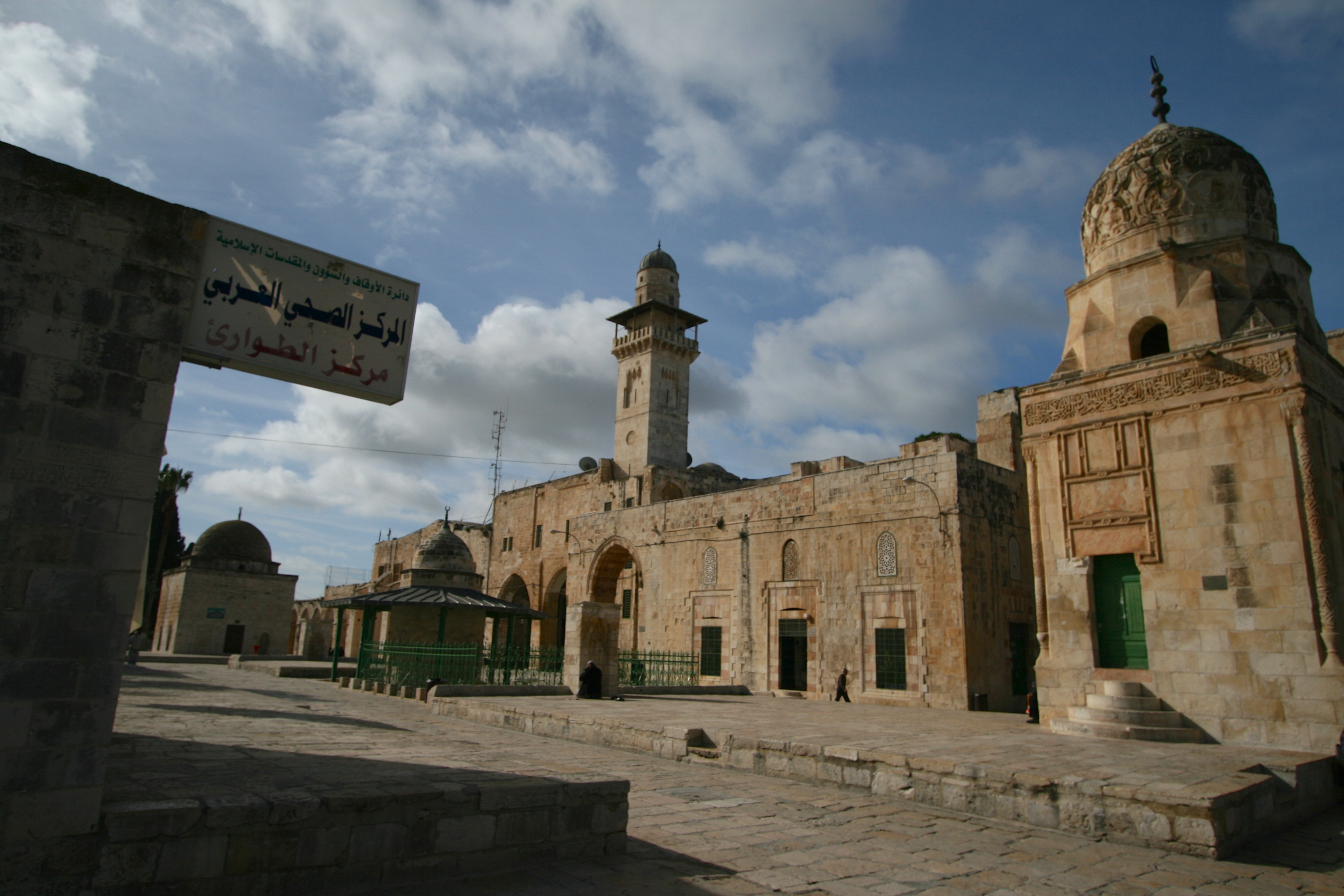
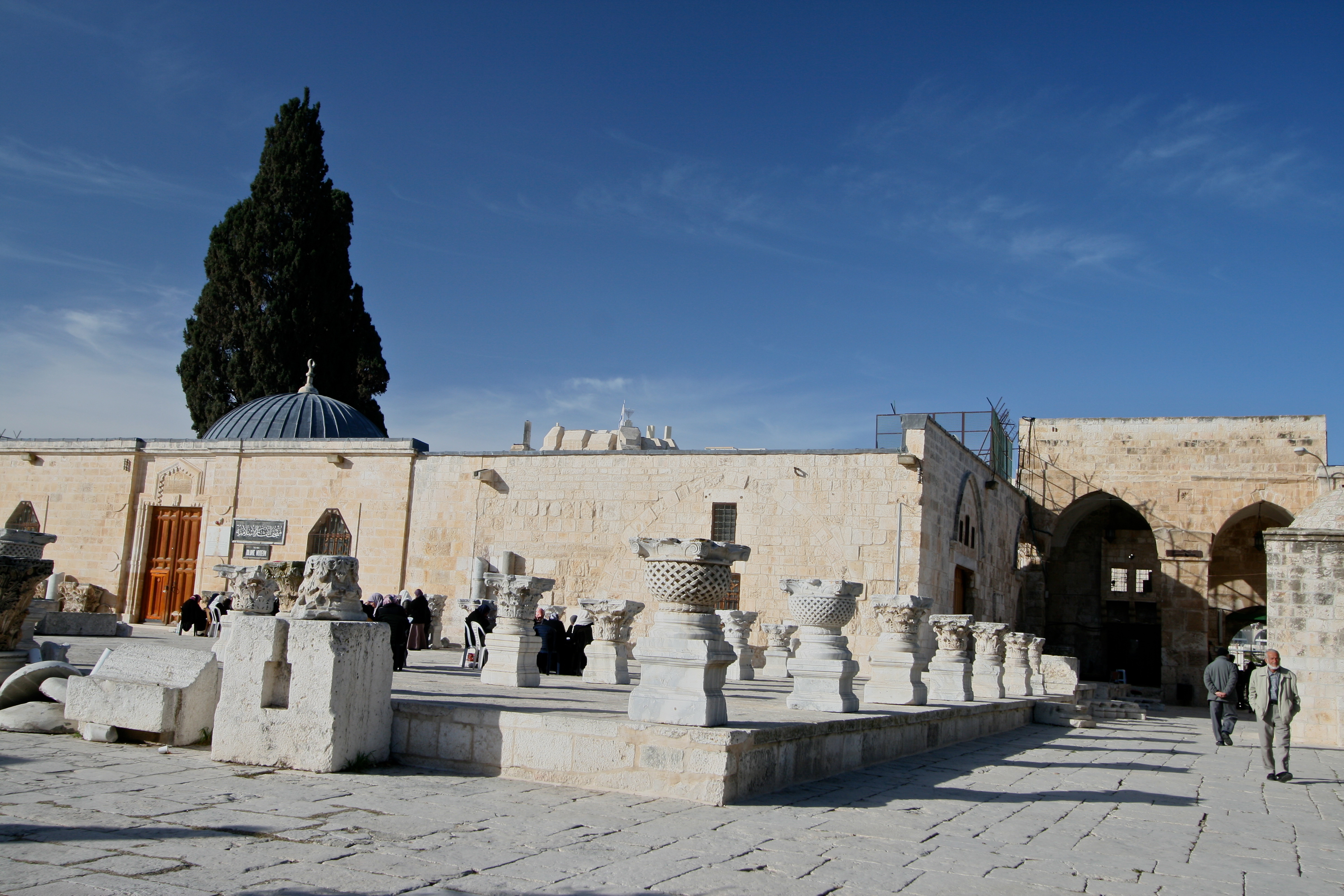
Showing posts with label The Israel Experience 2015. Show all posts

Sunday, February 8, 2015

Day 8

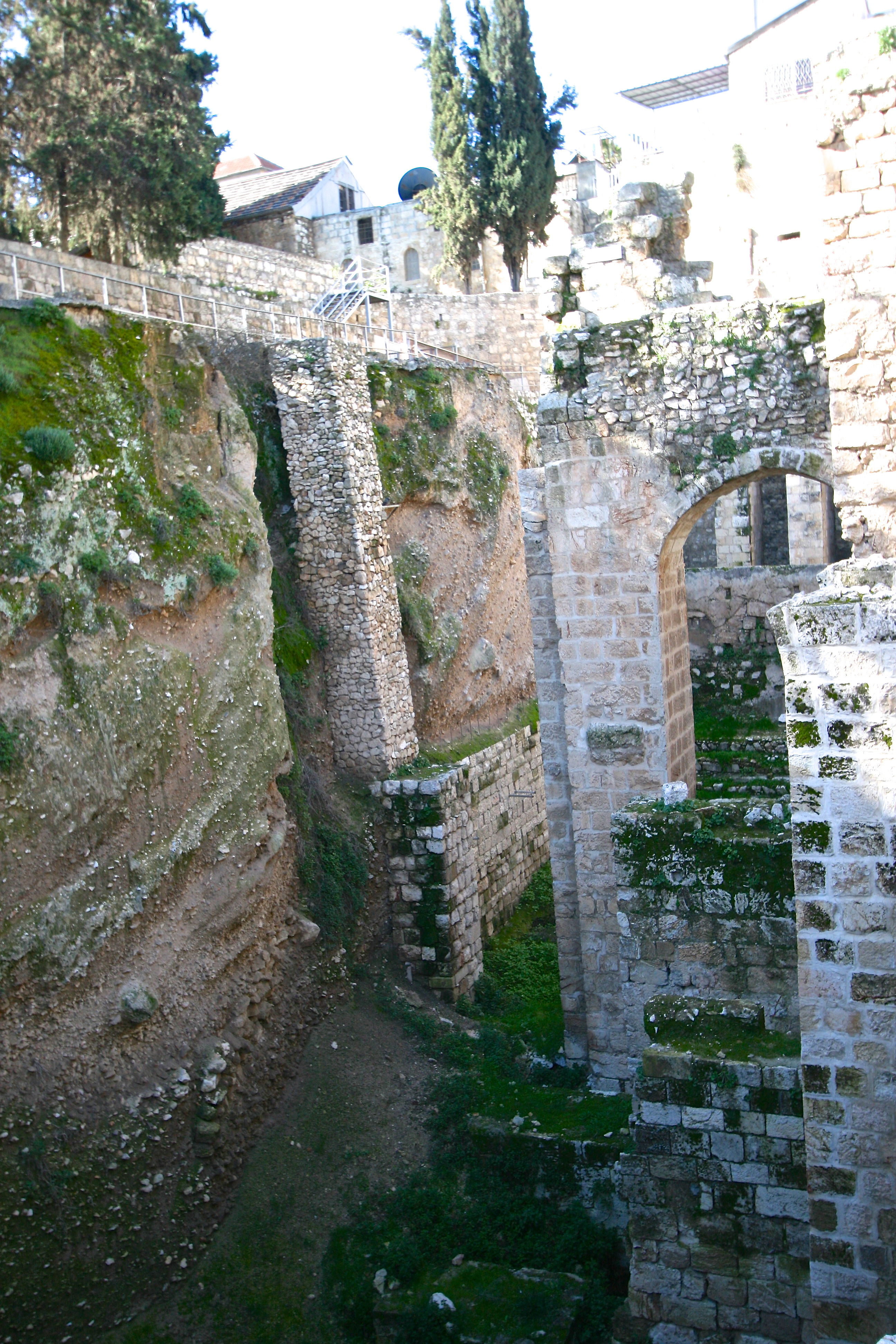
This is the last day. We have been getting very little sleep and rising every day at 6 AM for the past eight days– with no days of rest. Today will be our last day in the Holy City of Jerusalem. We started the day by entering the old city through the Lion’s Gate and headed to the Pool of Bethesda.  We can know for certain, from the story in John 5:1-16, that Jesus stood in this exact location.   The Pool of Bethesda was known for healing powers when its waters were stirred by an angel. Because of this, many sick people – blind, lame, paralyzed, came to the pool, waiting for the stirring of the water. One day when Jesus came by, He saw a man that had been lame for 38 years waiting to be placed into the waters. Jesus asked him: “Do you want to be healed?” What a strange question for someone who has been unable to walk for 38 years.  Jesus knows the hearts of all men and yet, knowing this man’s heart, specifically asked him this question. The man answers that he has no one to place him into the pool. Jesus then speaks and the lame man is immediately healed which causes a problem for the Jews because he was healed on the Sabbath.  There were five porches located here and the pool was fed by a spring. The beautiful St. Anne’s Church, a Crusader church, is also located here. This is the only church in the city that was not destroyed by the Arabs. The church was dedicated to Anna and Joachim, who according to tradition, lived here. The church was built over the site to commemorate where their daughter, Mary was born. The acoustics in the church are fantastic, so various groups go in and sing! We had the opportunity to sing praises to our God twice!

[caption id="attachment_204" align="alignnone" width="2592"]IMG_0745 The Pool of Bethesda[/caption]


We then began our walk along the Via Dolorosa (Way of Grief). This is the path of agony that the Jesus took carrying the cross to Golgotha.  This began at the Antonia Fortress where He was tried, beaten, and sentenced to death.  The Fortress was built in 35 BC to protect the Temple Mount and functioned as headquarters for the Roman soldiers. (This is also the place where Paul was taken by the Roman soldiers after he incited a riot by preaching the Gospel on the Temple Mount in Acts 21:30 -22:29). This is traditionally where the trial took place, but there are some that think that the trial may have taken place at Pontius Pilate’s palace, which would change the route of the Via Dolorosa.

The Via Dolorosa is marked with 14 stations. Near the Fortress was the actual stone pavement and at one location was an etching in the stone that the Roman soldiers used to play the “Game of the Kings”- they would have the condemned person throw a dice or marker on the “game board” and where the dice landed would determine how he would be tortured.  One of the options would be a quick death, but the other options were horrible.  It is likely that Jesus was subjected to this game.

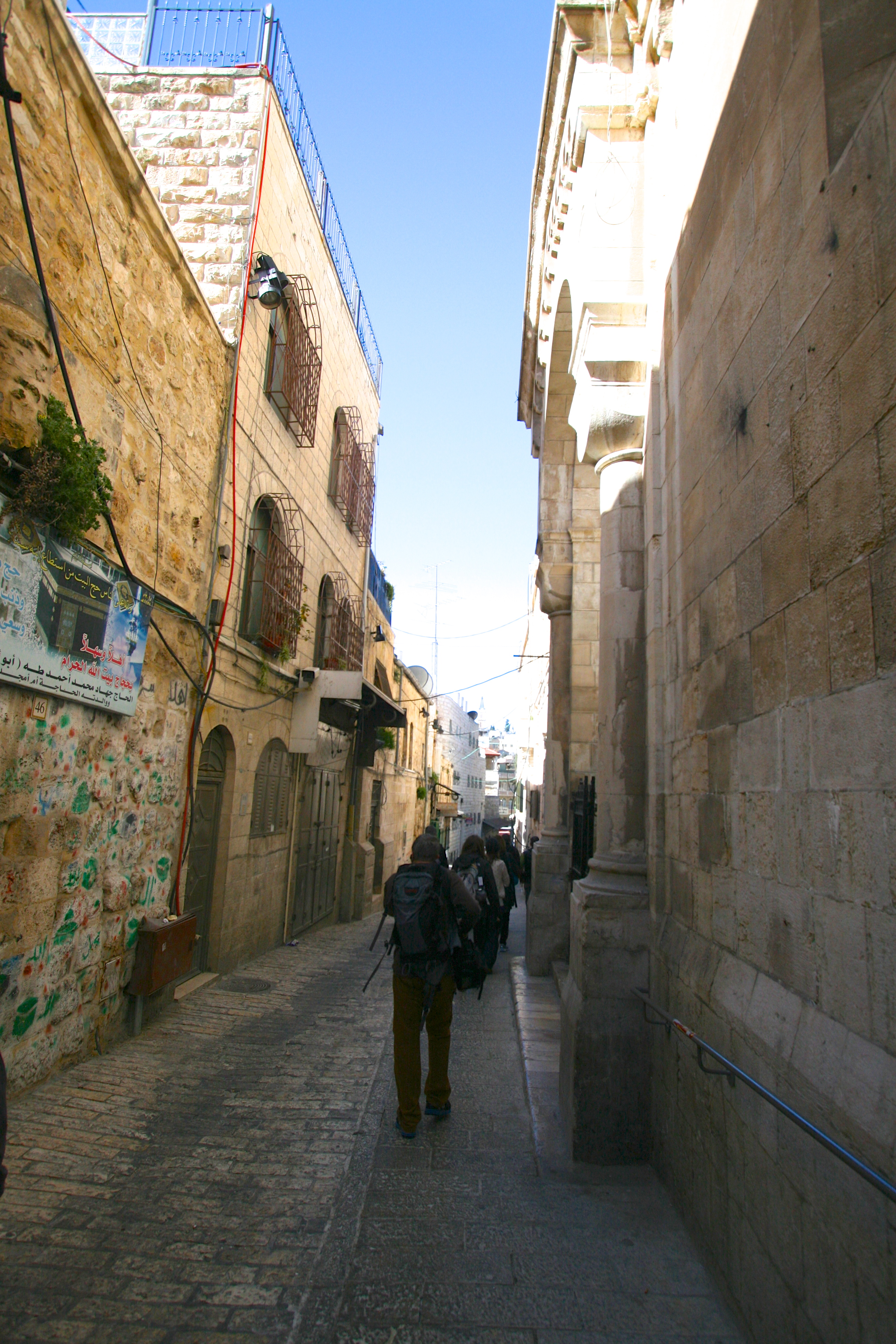
Today the path is narrow and filled with various Muslim vendors. Back in Jesus’ day the path would have been narrow and filled with many people shouting and jeering at the condemned.
IMG_0759

[caption id="attachment_208" align="alignnone" width="2592"]IMG_0766 Streets along the Via Dolorosa[/caption]


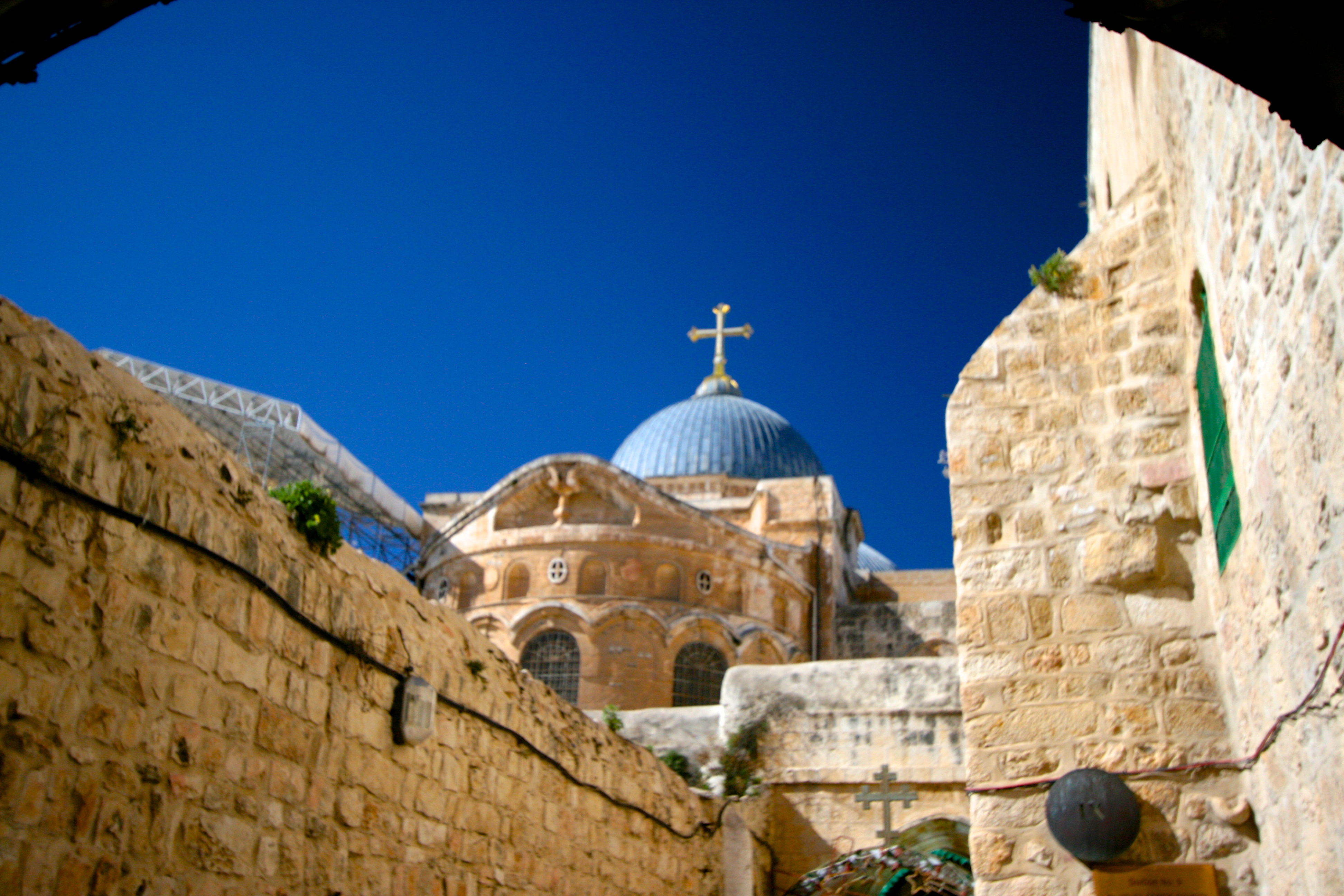
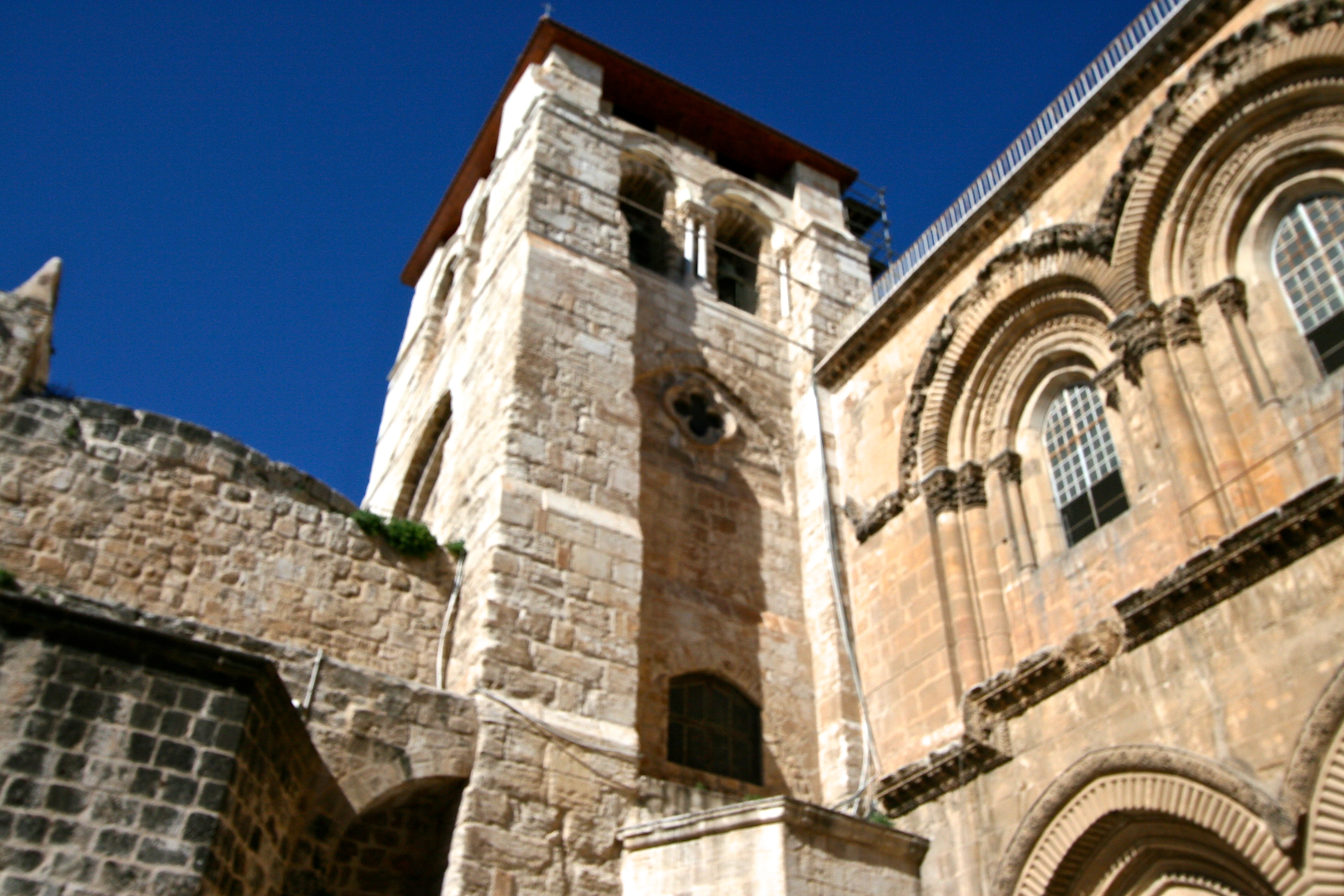
The path ends outside the city walls at the Church of the Holy Sepulcher built on Golgotha, the rocky hill shaped like a skull on which Jesus was crucified. This church was built by Constantine in 333 to commemorate the death and burial of Jesus. His mother, Helena, chose this site based on the local history of it being a place of execution in the time of Jesus .  Other factors that favor this location include the existence of a nearby garden and tombs , as well as her finding fragments of wood planks that were likely used as cross pieces. The church is old, very large, and dark inside.  There is a place inside where you can actually touch a piece of the Golgotha rock. The church is owned by 6 denominations – Armenian Orthodox, Greek Orthodox, Syrian Orthodox, Ethiopian Orthodox, Coptic Christian, and Roman Catholic. Also inside the church is located an actual empty tomb hewn into the rock.  It was an example of the type of tomb that Jesus would have been laid in.

For on that early morn, the women came to the tomb to anoint His body, found the stone had been rolled away, and an angel greeted them with these words: “Why do you look for the living among the dead? He is not here, for He has risen!” (Luke 24:1-7)


[caption id="attachment_210" align="alignnone" width="3888"]IMG_0769 Church of the Holy Sepulcher[/caption]


IMG_0773

It was a little difficult at times to block out all the distractions and remind myself of what actually happened in this place over 2000 years ago. Even if this was not the exact spot, this was certainly close to the place where He died and three days later rose from the dead.  One thing is for CERTAIN:  As Paul wrote in 1 Corinthians 15:1 “Moreover brethren, I declare to you the gospel which I preached to  you… That Jesus Christ died for our sins according to the Scriptures, and that He was buried, and that He was rose again the third day according to the Scriptures…”  Hallelujah, what a Savior!

We then spent time shopping in the streets of the old city in both the Muslim and Jewish quarter. One thing I loved in Galilee and Jerusalem was having fresh squeezed pomegranate juice sold by the vendors. Pomegranates are plentiful in Israel and some actually believe that the fruit that Adam and Eve picked was a pomegranate.

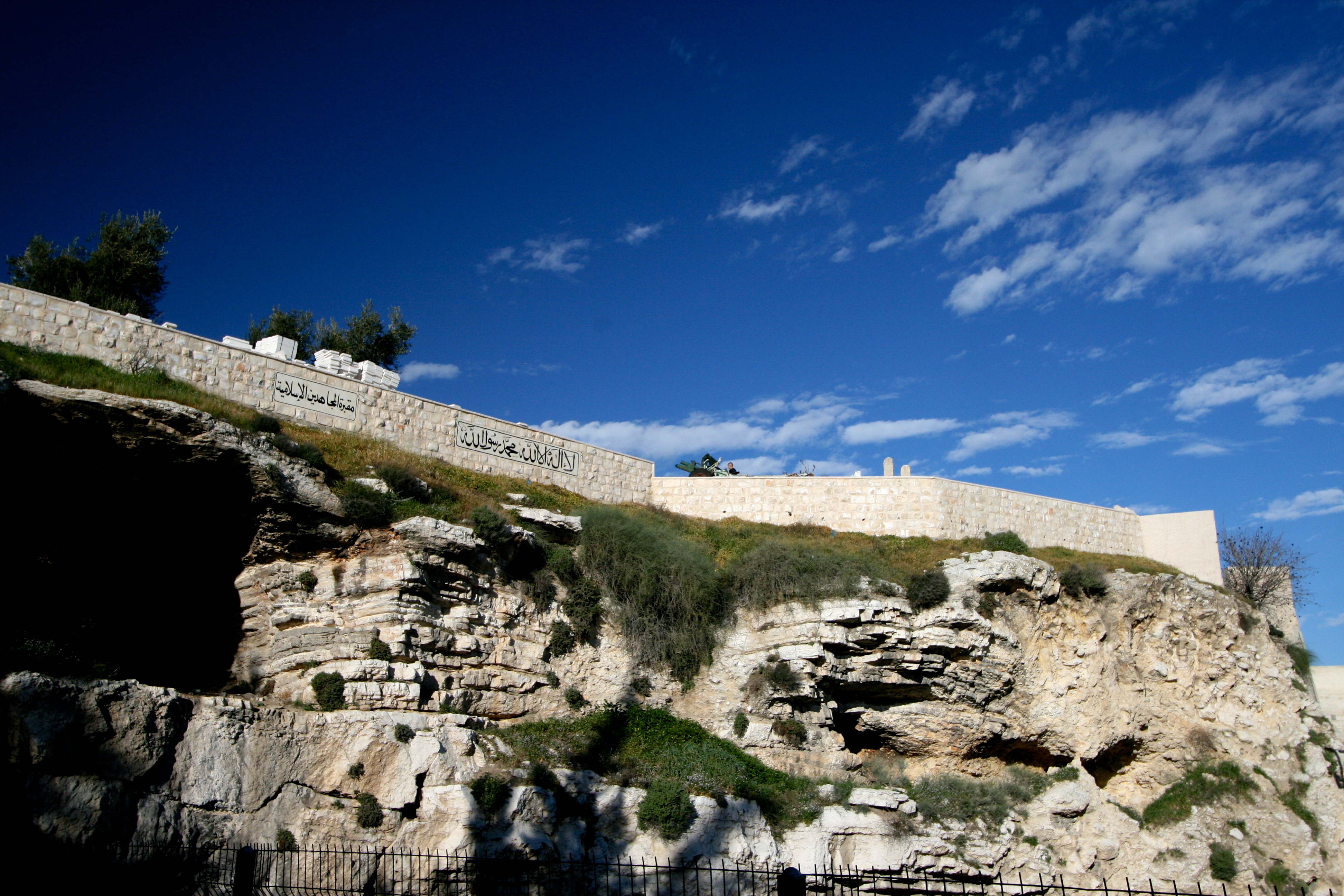
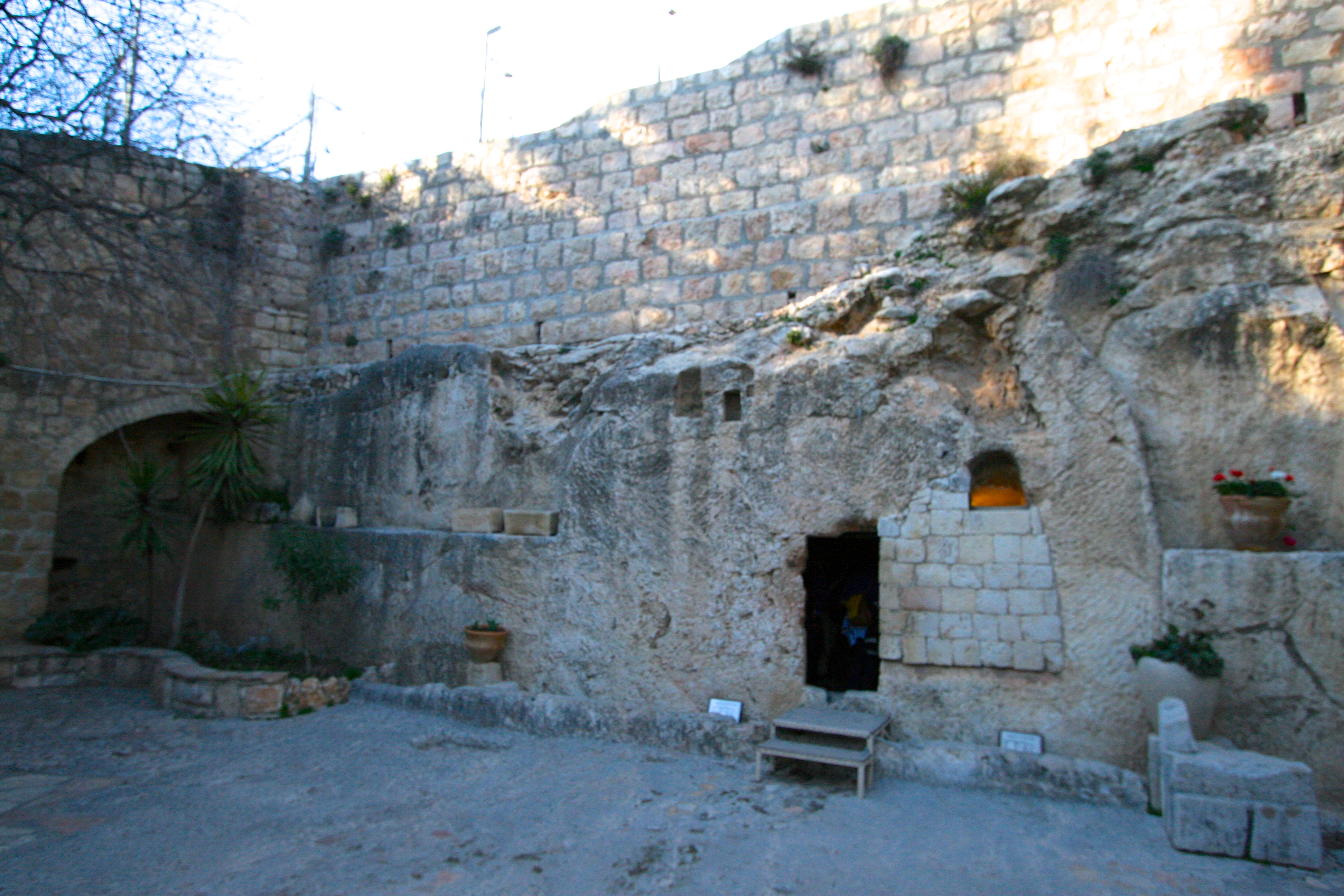
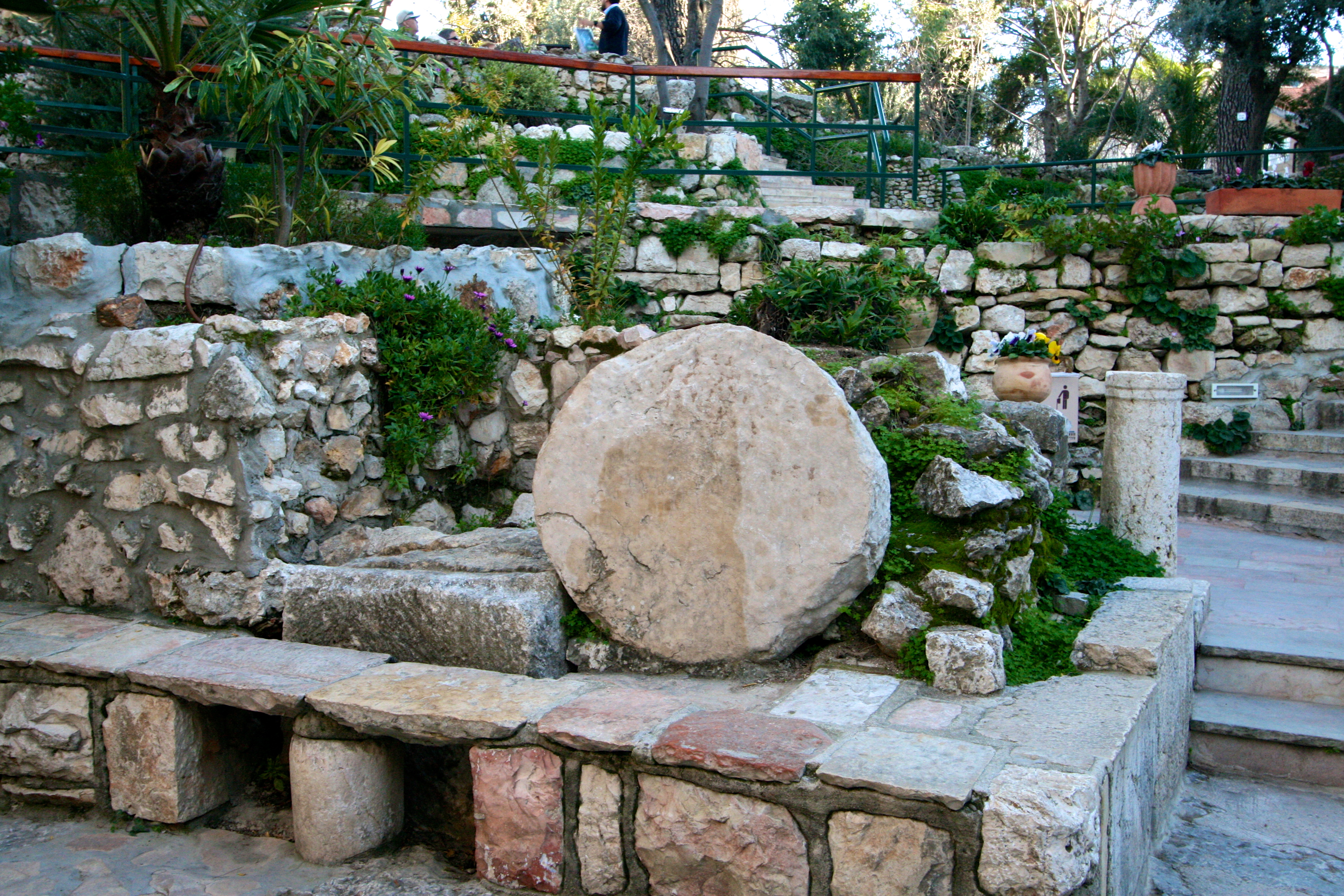
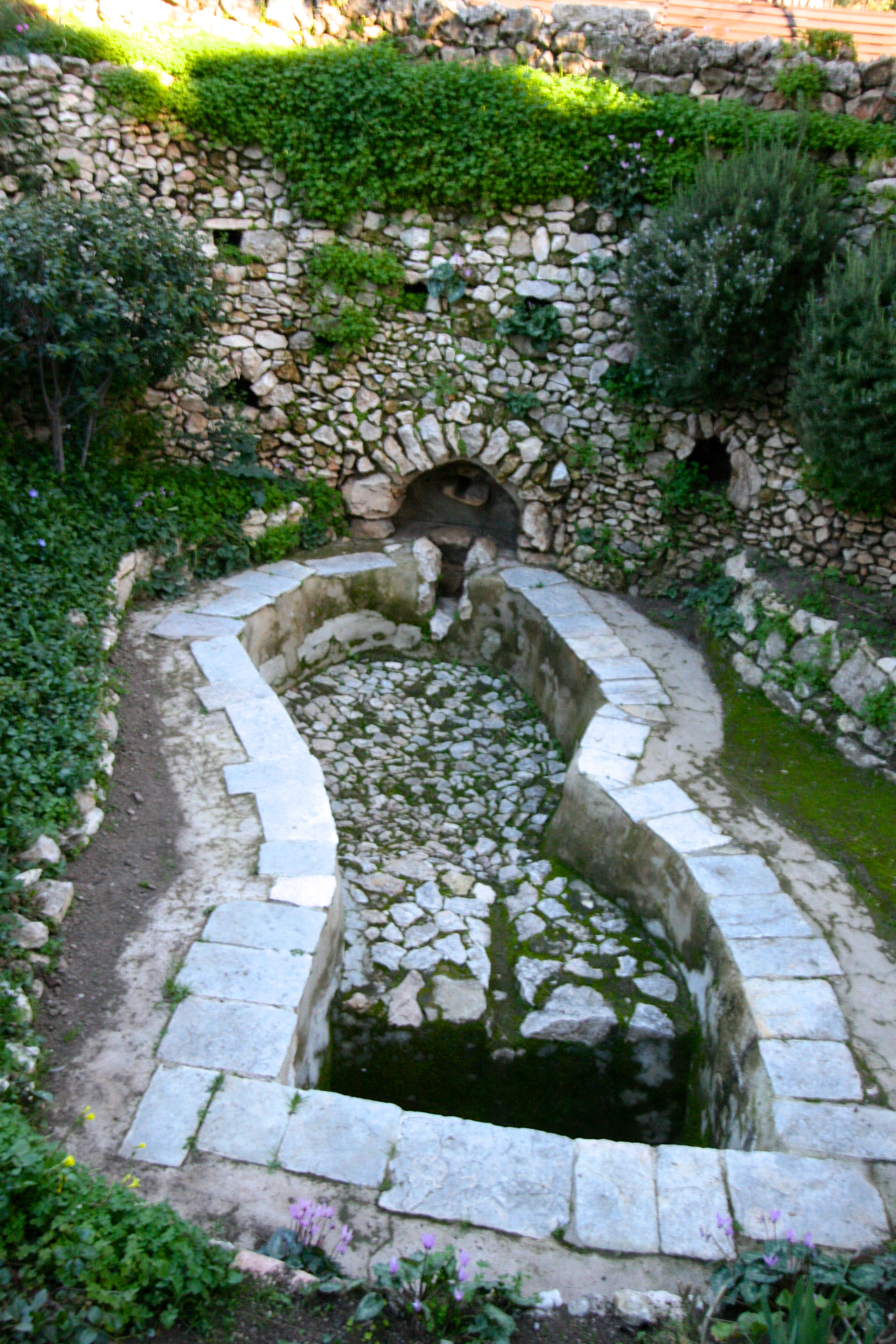
Our last stop was the Garden Tomb which was located outside the Damascus Gate. This is another spot that has been suggested to be a possible location of Golgotha and the empty tomb. This is a very quiet, beautiful garden setting. The rocky hill resembles a skull and a tomb was discovered in 1882 by British General Gordon. Here we saw a tomb like one that Jesus would have been placed in and a stone like the one that would have been placed in front of the entrance. Interestingly, there were grooves in front of the grave where the stone would roll. We worshiped together as a group in this quiet setting and reflected on all that we had seen and heard over the past days.

[caption id="attachment_212" align="alignnone" width="3888"]IMG_0801 The rocky hill at the Garden tomb[/caption]


[caption id="attachment_215" align="alignnone" width="3888"]IMG_0811 Entrance to the grave at the Garden Tomb[/caption]


[caption id="attachment_214" align="alignnone" width="3888"]IMG_0807 A rock that would have been used to seal off the tomb[/caption]


[caption id="attachment_213" align="alignnone" width="2592"]IMG_0805 An ancient winepress in the Garden[/caption]


We ended the day having dinner at a very cool old hotel called the American Colony, then boarded the bus for the trip to the Tel Aviv airport to catch an overnight flight back to the USA –it will take us a total of 18 hours to get back to Greenville.  For the last time…..


Lila tov


From Deb: This has been a remarkable, marvelous journey. One that I am not sure I can put into words and summarize well. There was so much to see and absorb and I know that I only absorbed a small amount of it all. Starting at Galilee, then travelling through the wilderness, and then ending in Jerusalem, my mind was constantly operating on overload. It will take some time to process it all.  My thoughts and prayers go to my Savior and God for all that He has done and is doing in my life. All praise to Jesus for His gift of love and mercy and the grace that He pours out on me every day! “But God, who is rich in mercy, because of his great love with which He loved us, even when we were dead in sin, made us ALIVE together in Christ (by grace you  have been saved)…(Ephesians 2:4)

From Jeff:  I agree with Deb -  I am still trying to process all of the sights, sounds, information, and experiences of the last 8 days.  This experience has been like none other.  Being able to put the scriptures that I have studied and love in the context of the land and locations in which they were written, and where the stories took place, has been incredible.  It has helped me to make connections and have understanding that I did not have prior to the trip.  Seeing the various sites and excavations, and seeing how the history and the archaeologic findings line up with the Biblical accounts has served to confirm my trust in the scriptures and increase my awe of a mighty God.  I trust God will continue to use this experience to draw me closer to Himself, and I praise Him for this opportunity.

 

Saturday, February 7, 2015

Day 7

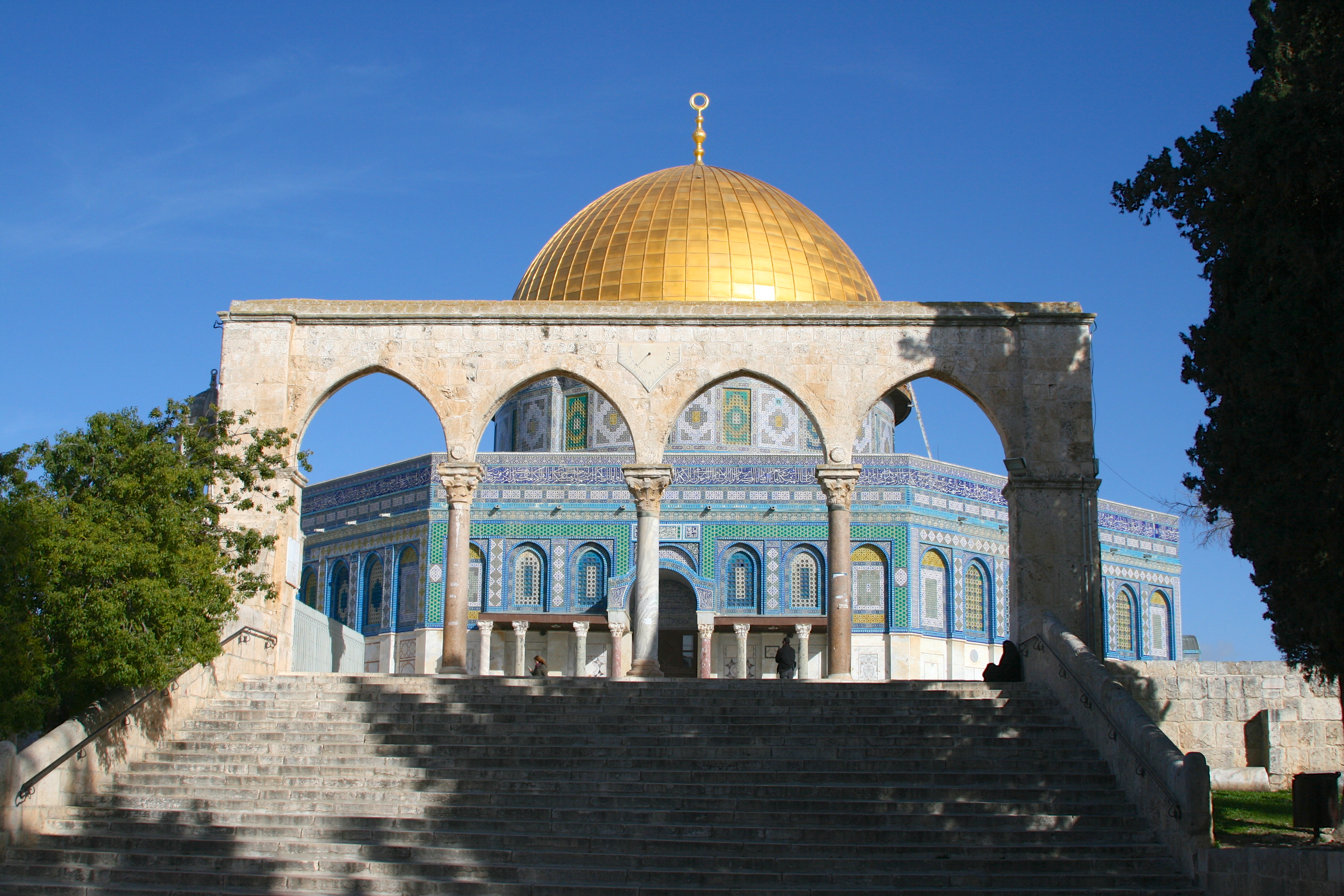
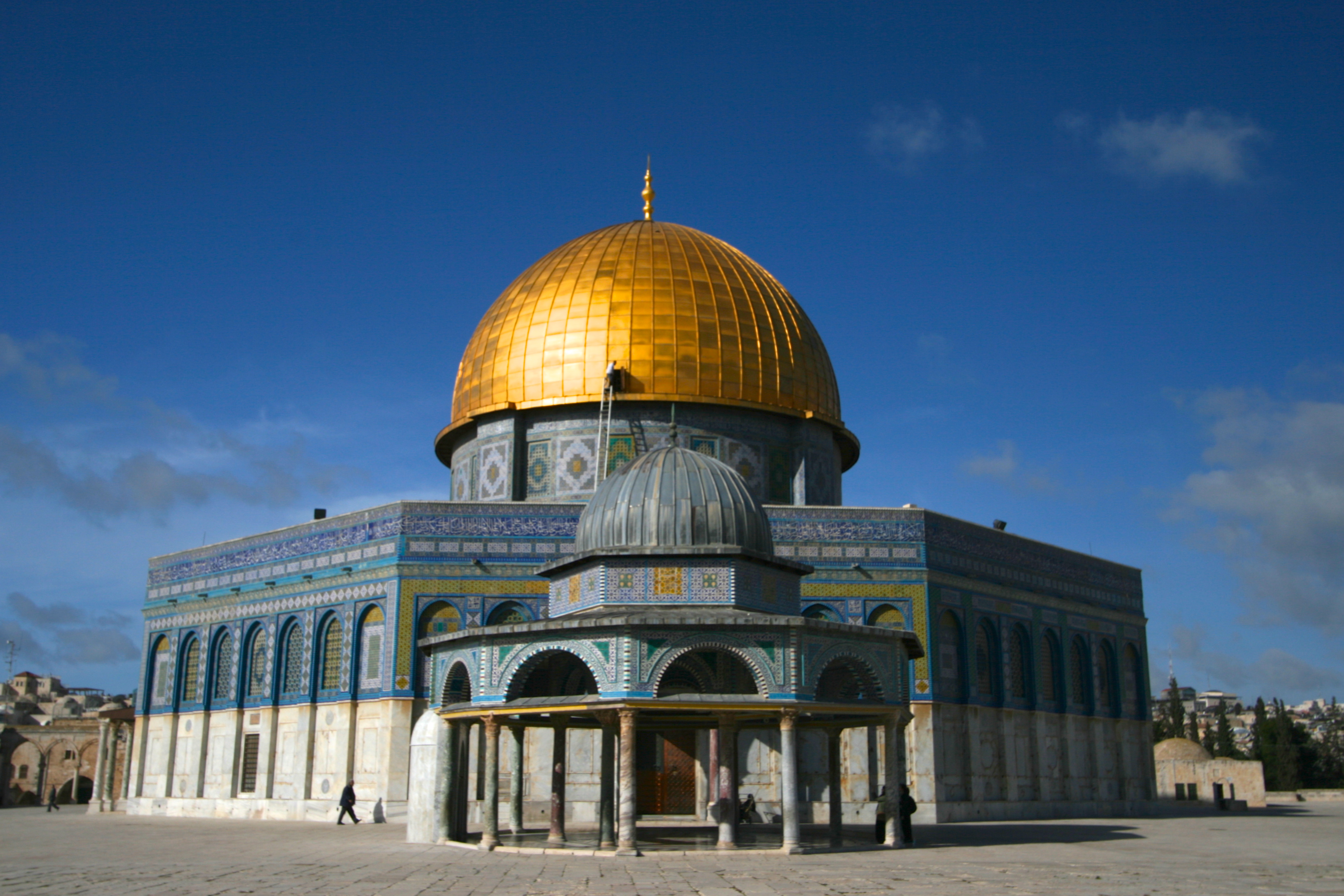
We returned today to the Old City of Jerusalem and entered again through the Dung Gate.  This time we were to visit the Temple Mount, which is one of the most important religious sites in Jerusalem, both for the Jews as well as the Muslims. The present site is dominated by two important structures: the al-Aqsa Mosque and the Dome of the Rock.

There is so much history on this Mount. This is the location of Mount Moriah where Abraham sacrificed Isaac. This is the place where Solomon built the grand temple for Yahweh. That temple was destroyed, then later rebuilt by Ezra and Nehemiah after the Jewish exile period.  This temple was more modest than the original, but when Herod the Great came into power he established the Temple Mount (an elevated plateau surrounded by four walls) on which a more glorious and ornate temple was built. This is the temple where Jesus taught and overthrew the money changers in the court. It was destroyed by the Roman Empire in 70 AD. Afterwards the site remained undeveloped for six centuries, until the Arab conquest.  A beautiful shrine called the Dome of the Rock was built in 691 that sits over the ROCK, a remnant of Mount Moriah where it is thought that the Jewish Temple was situated. Some believe this to be the exact place where the Holy of Holies was located.  The location is the holiest site in Judaism and is the place Jews turn towards during prayer. Due to its extreme sanctity, many Jews will not walk on the Mount itself, to avoid unintentionally entering the area where the Holy of Holies stood.

Among Sunni Muslims, the Mount is widely considered the third holiest site in Islam, revered as the Noble Sanctuary and the location of Muhammad's journey to Jerusalem and ascent to heaven. After the Muslim conquest of Jerusalem in 637 AD, Umayyad Caliphs commissioned the construction of the al-Aqsa Mosque and Dome of the Rock on the site.  In light of the dual claims of both Judaism and Islam, it is one of the most contested religious sites in the world. Since the Crusades, the Muslim community of Jerusalem has managed the site as a Waqf, without interruption.  As the site is part of the Old City, controlled by Israel since 1967, both Israel and the Palestinian Authority claim sovereignty over it, and it remains a major focal point of the Arab–Israeli conflict.  In an attempt to keep the status quo, the Israeli government enforces a controversial ban on prayer by non-Muslims.


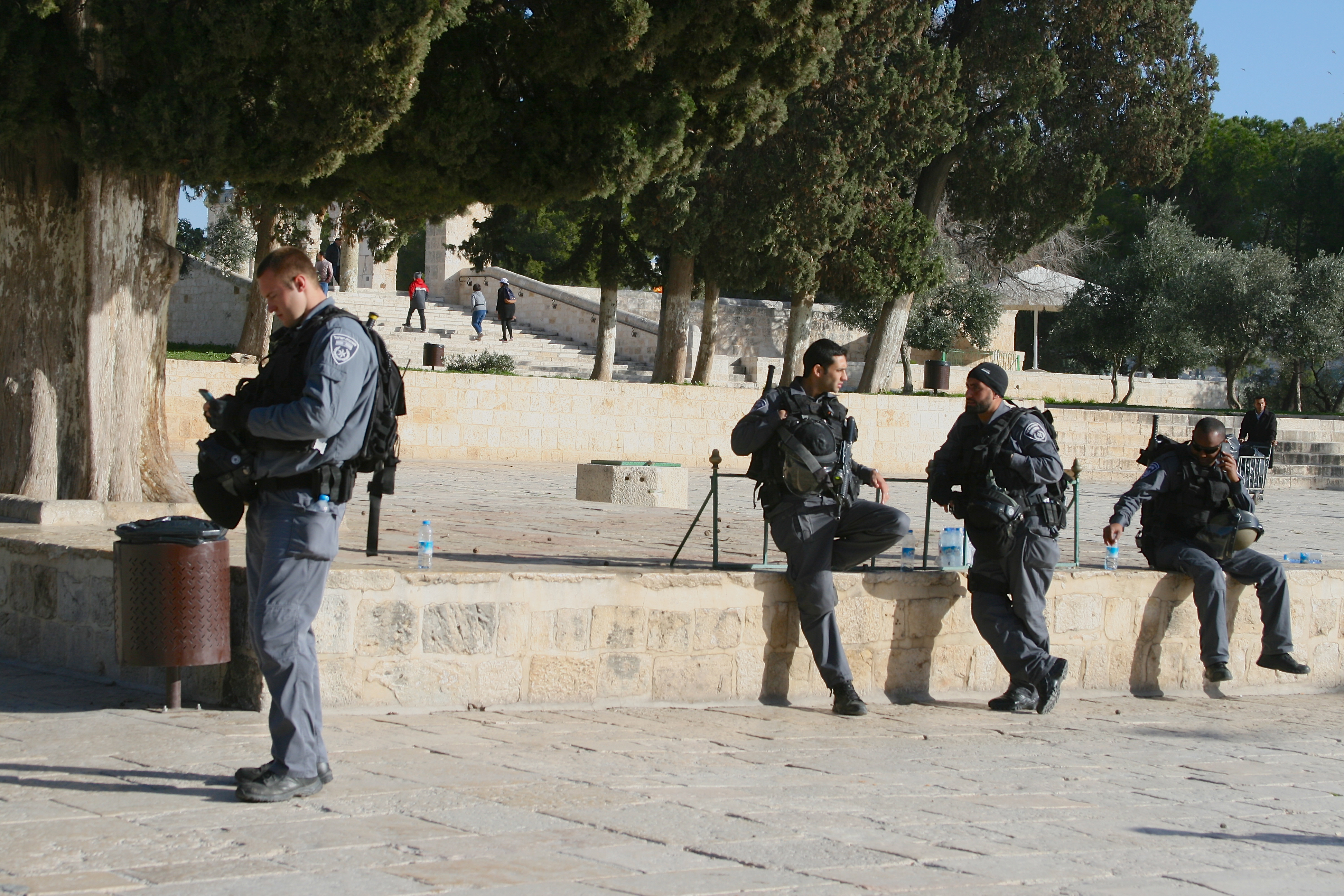
This is probably the hottest and most disputed piece of real estate in all the world. Surprisingly, the security as we entered was not as tight as entering the  Jewish Western Wall, although Israeli soldiers armed with automatic weapons patrolled the area. This was a very different experience from the Wailing Wall. It was a quiet setting for the most part. It is very unusual for a religious Jew to enter and walk on the Mount because he would NEVER want to step on the Holy of Holies place since no one knows exactly where it was. While we were there, however, a religious Jew came walking by [with no shoes on] and this created a huge ruckus (big balagan) among the Muslims in the area, who jeered and made rude, loud comments in Arabic! This also happened a second time: I had just passed some older, grandmotherly Muslim women who smiled pleasantly and said “salam”. Then just a few moments later, these same women started chanting loudly at a religious Jew. These chants were not very pleasant.  Then I watched as they went on to what was most likely a study of the Koran, hugging, and laughing with their friends. Other groups were gathered elsewhere quietly. My heart was somewhat numb with very little feeling. This people also desperately need King Jesus to set them free.

[caption id="attachment_179" align="alignnone" width="3888"]IMG_0591 Israeli soldiers on the Temple Mount[/caption]


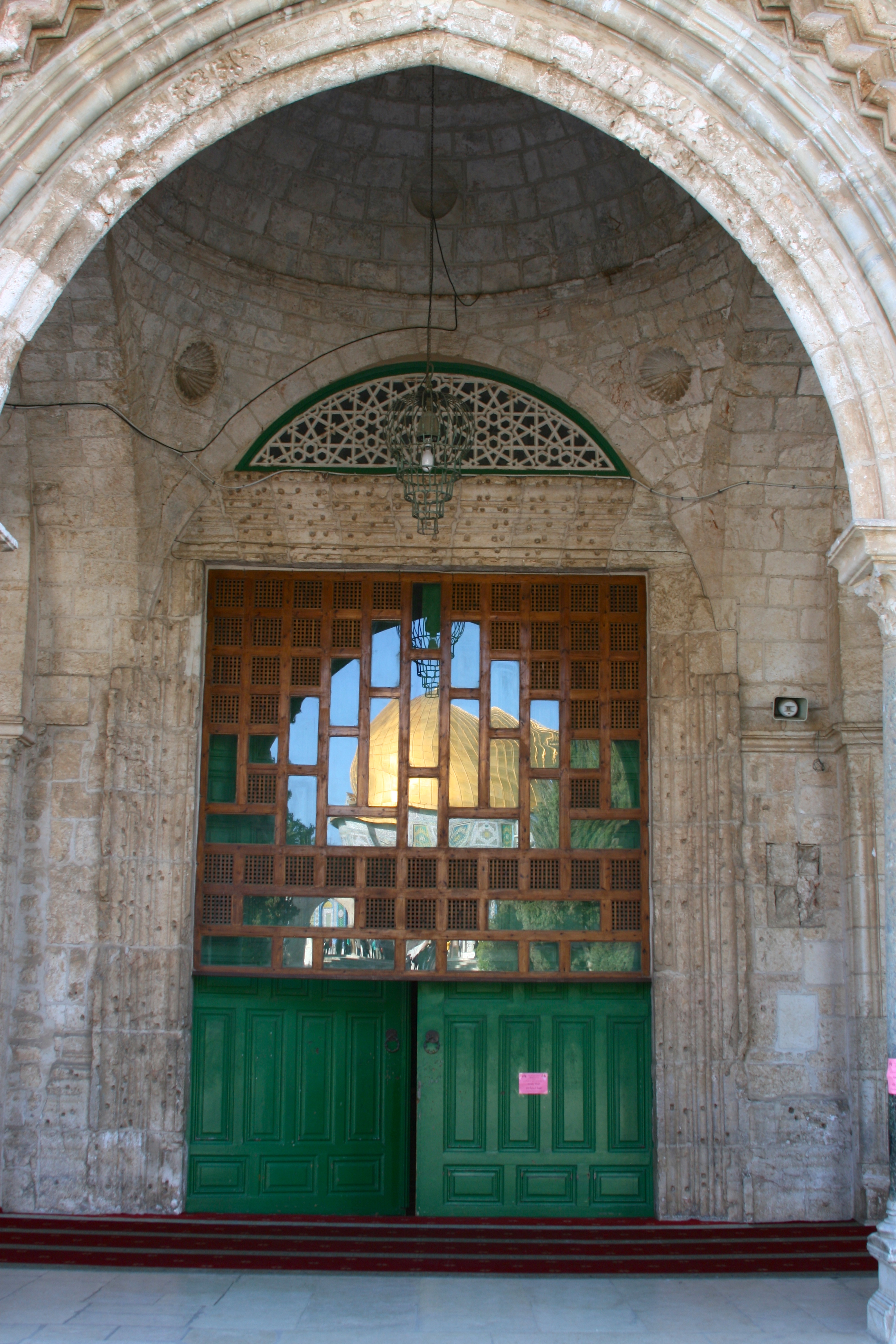
[caption id="attachment_180" align="alignnone" width="2592"]IMG_0598 Front door of the al-Aqsa Mosque[/caption]

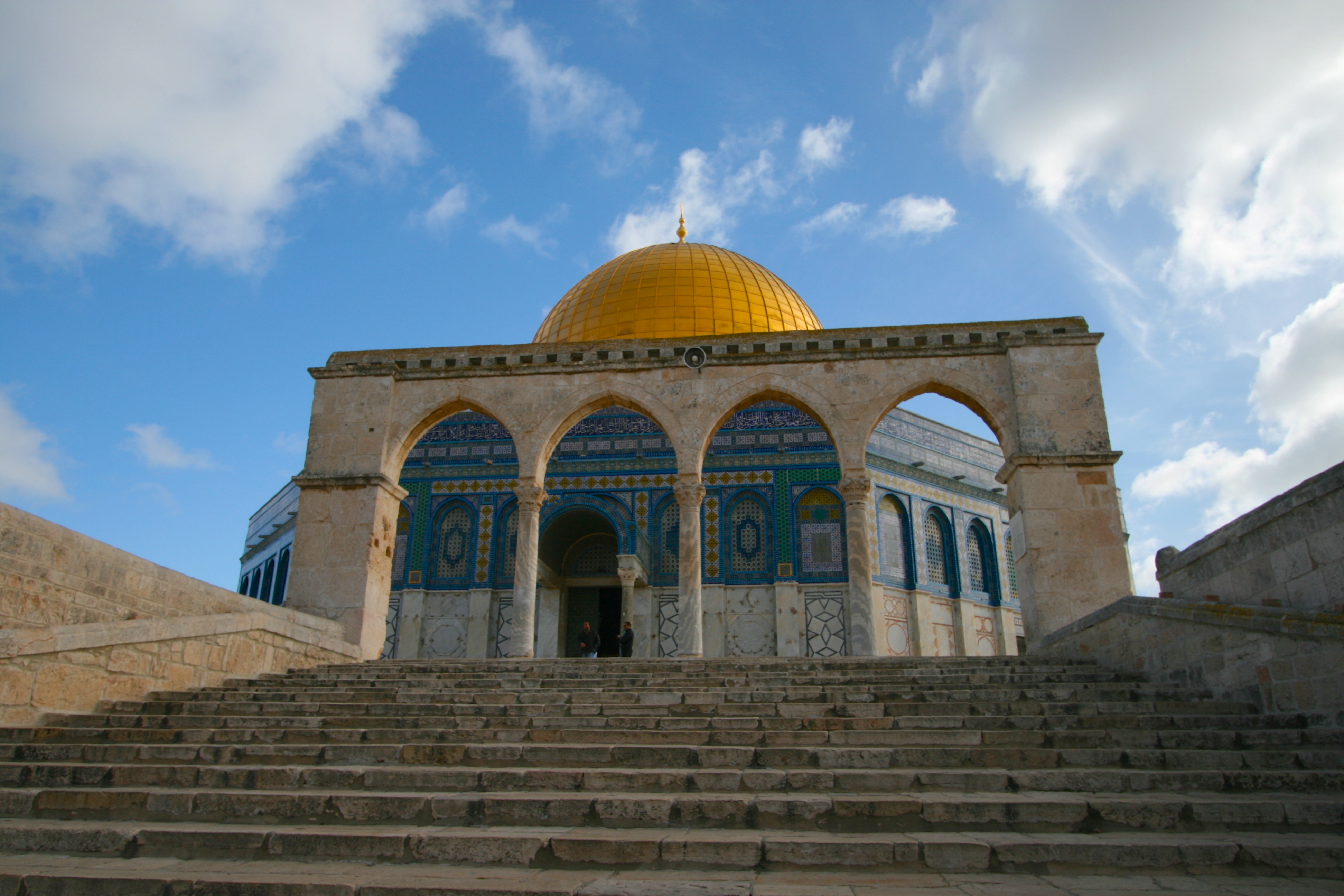
[caption id="attachment_181" align="alignnone" width="3888"]IMG_0607 Front access to the Dome of the Rock[/caption]

[caption id="attachment_183" align="alignnone" width="3744"]IMG_0631 Dome of the Rock[/caption]


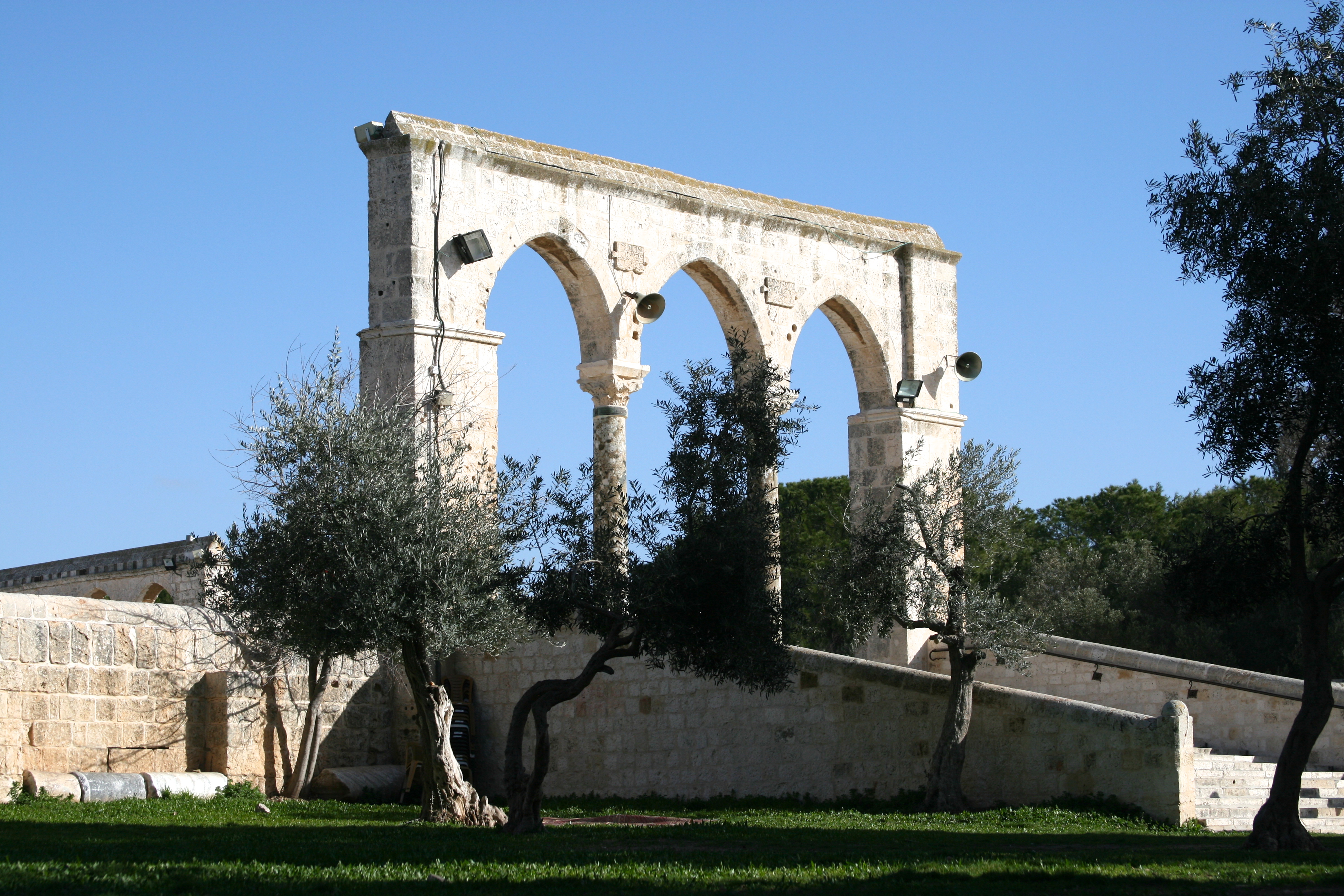
[caption id="attachment_182" align="alignnone" width="3888"]IMG_0610 Arches on the Mount[/caption]


[caption id="attachment_185" align="alignnone" width="3888"]IMG_0639 Rear stairway to the Dome[/caption]


[caption id="attachment_184" align="alignnone" width="3888"]IMG_0638 Courtyard behind the Dome leading to the Muslim Quarter[/caption]


[caption id="attachment_178" align="alignnone" width="3888"]IMG_0586 Groups of women studying the Koran[/caption]


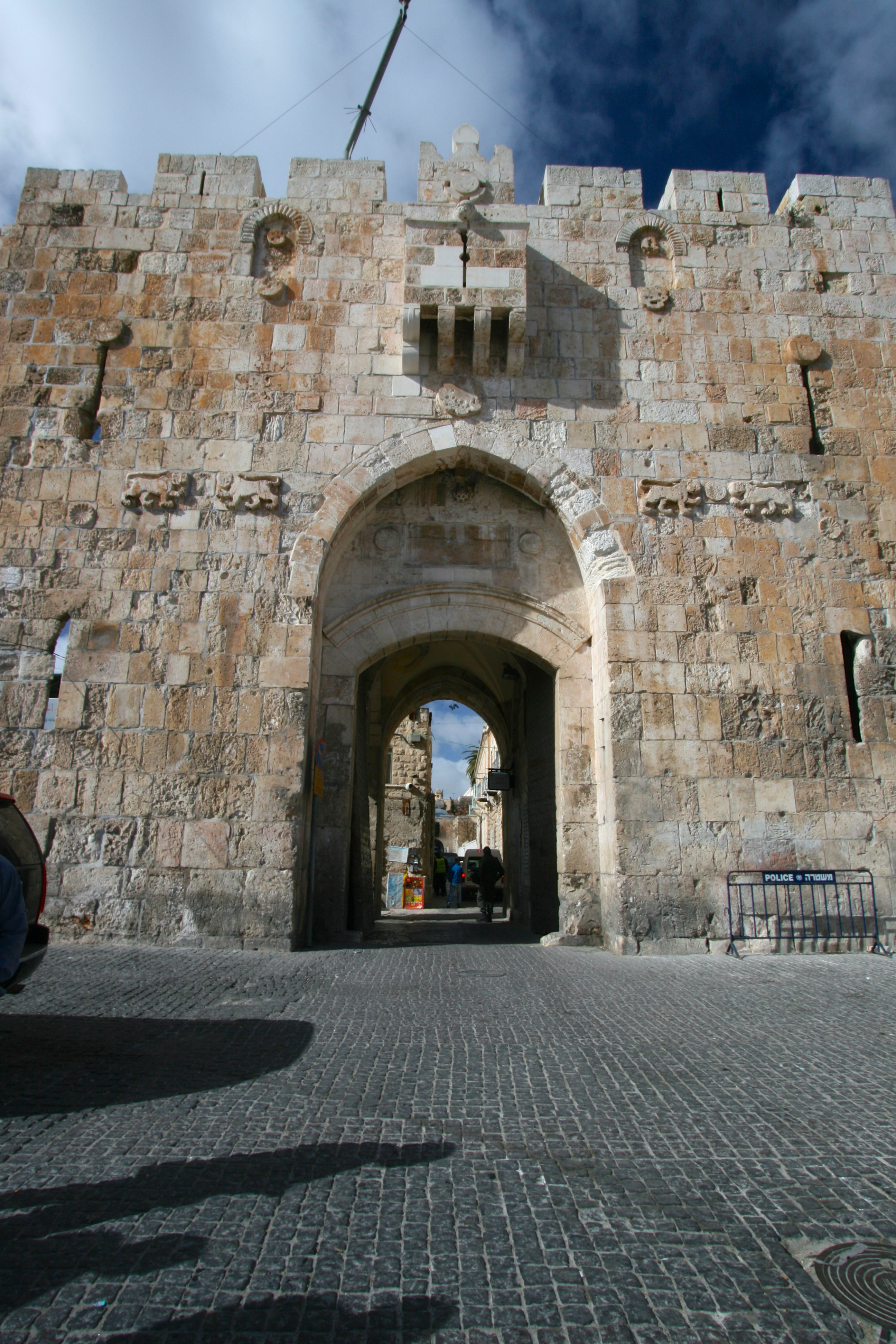
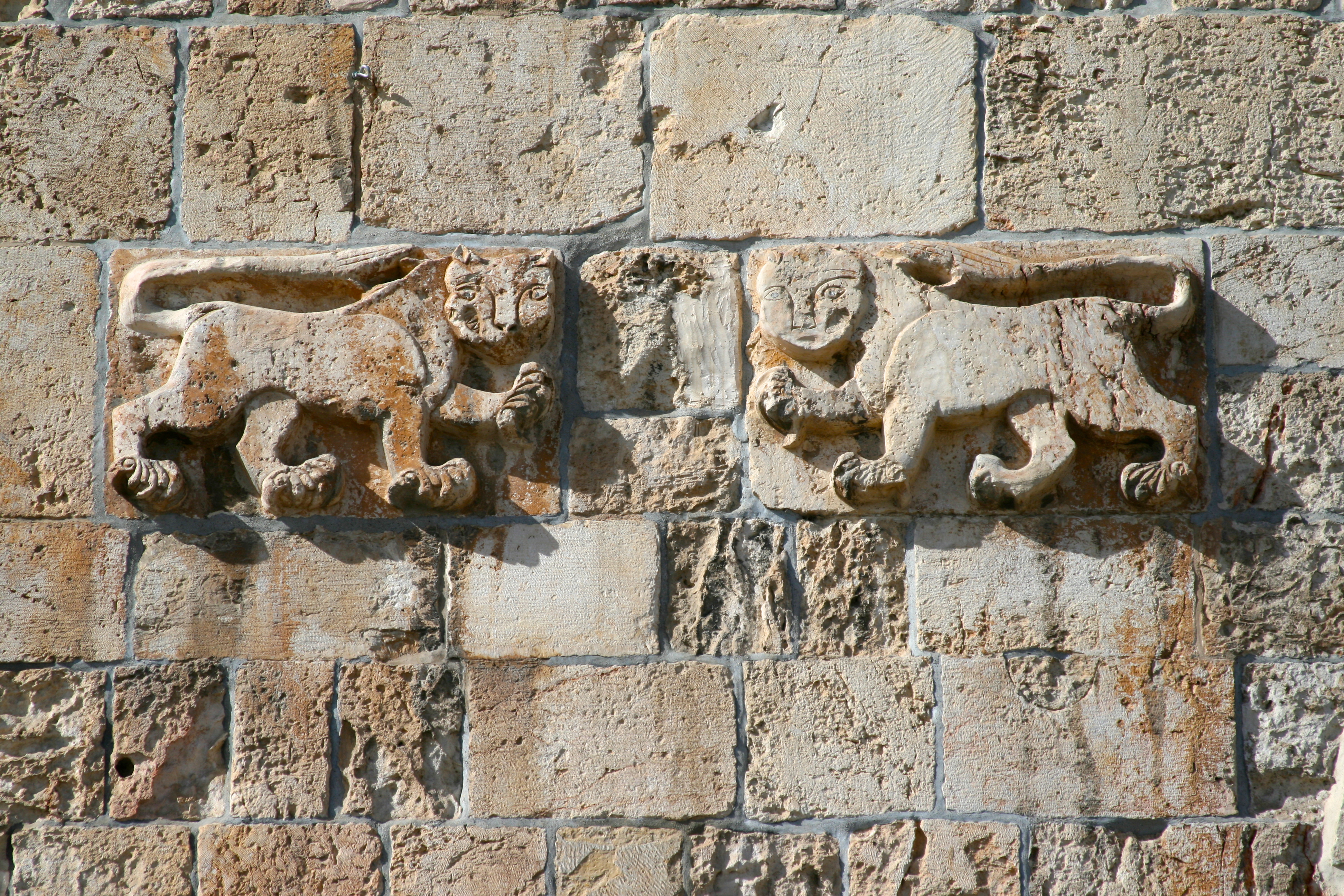
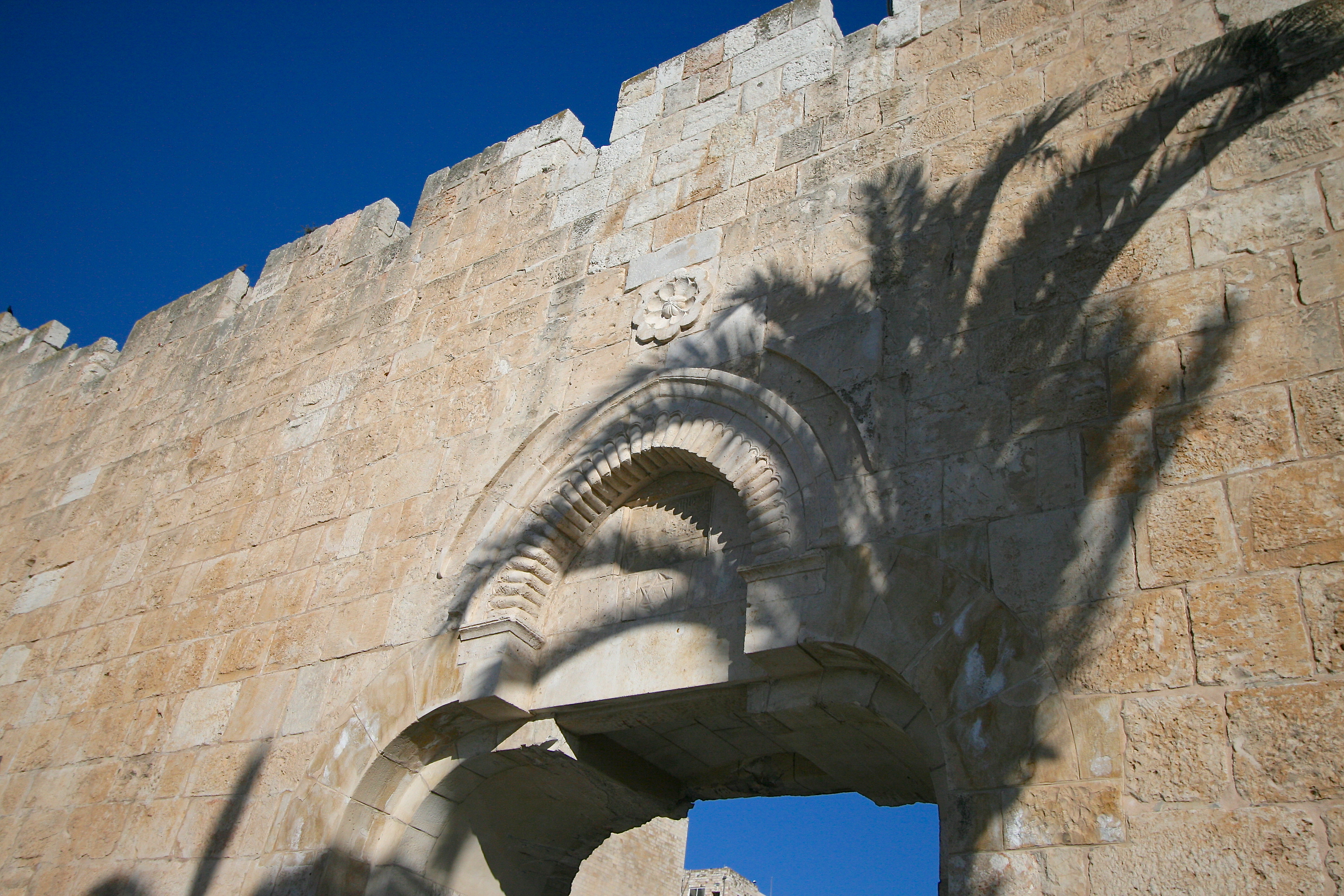
We left the Temple Mount and exited through the Lion's Gate.  The Lions' gate is located on the north-east walls of the old city of Jerusalem, leading to the Via Dolorosa.  It is sometimes called Stephen's Gate, because this is the gate that he was led out of and stoned.

IMG_0654

[caption id="attachment_187" align="alignnone" width="3888"]IMG_0655 Lion's Gate[/caption]


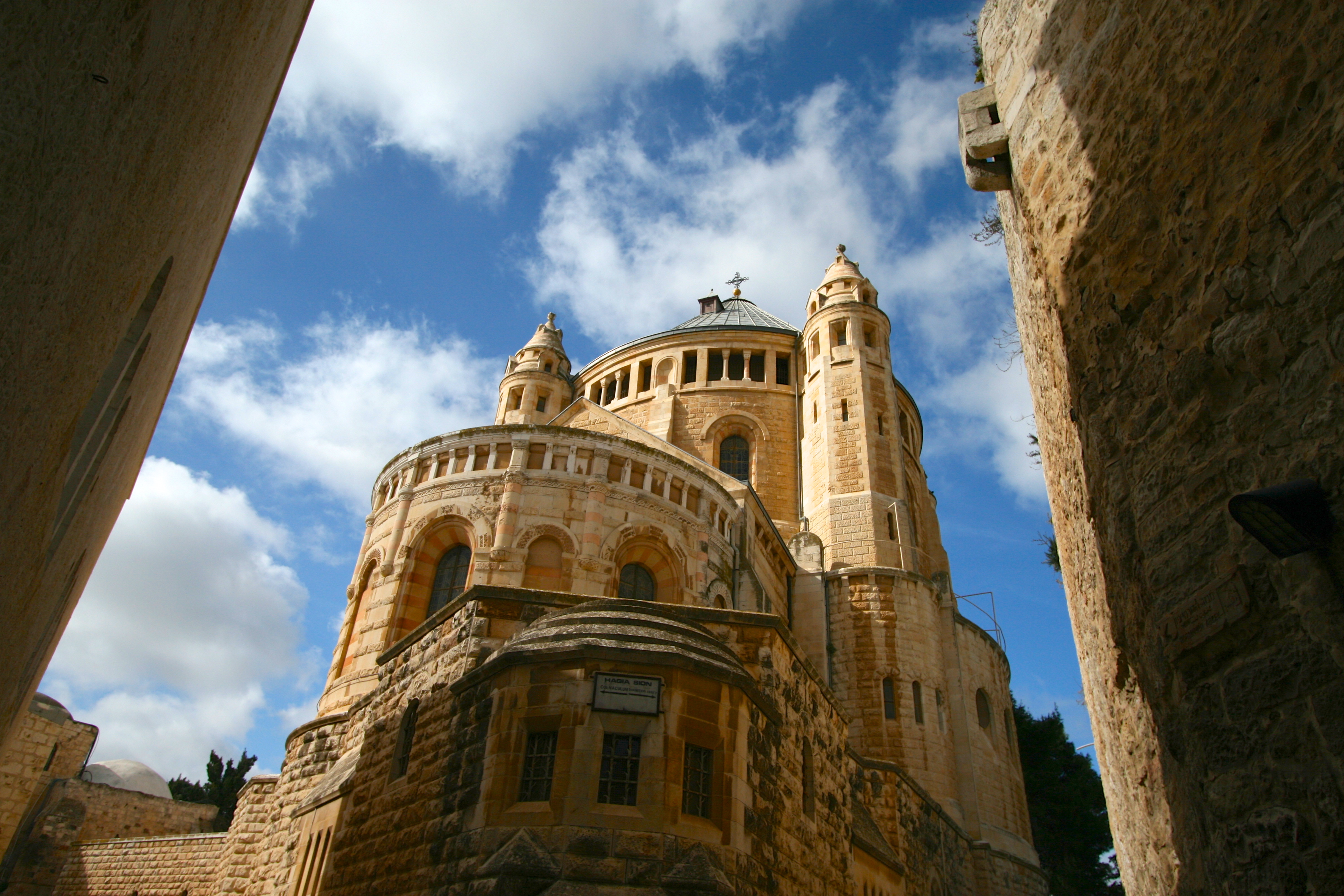
We continued on to the place known as the Upper Room on Mount Zion – the place that Jesus met with His disciples on the night of His betrayal, the night before His crucifixion.The room is on the upper floor of a two-story building near the Basillica of the Assumption, south of the Zion Gate in the walls of Jerusalem’s Old City.  This was also the place that His disciples and followers had gathered to wait for the coming of the Spirit after He had ascended.
[caption id="attachment_188" align="alignnone" width="3888"]IMG_0663 Basillica of the Assumption on Mount Zion[/caption]


Entering the Christian quarter, there was a completely different sense.  Freedom! Jesus the Messiah has come!  Praise God for the gift of the His Son!

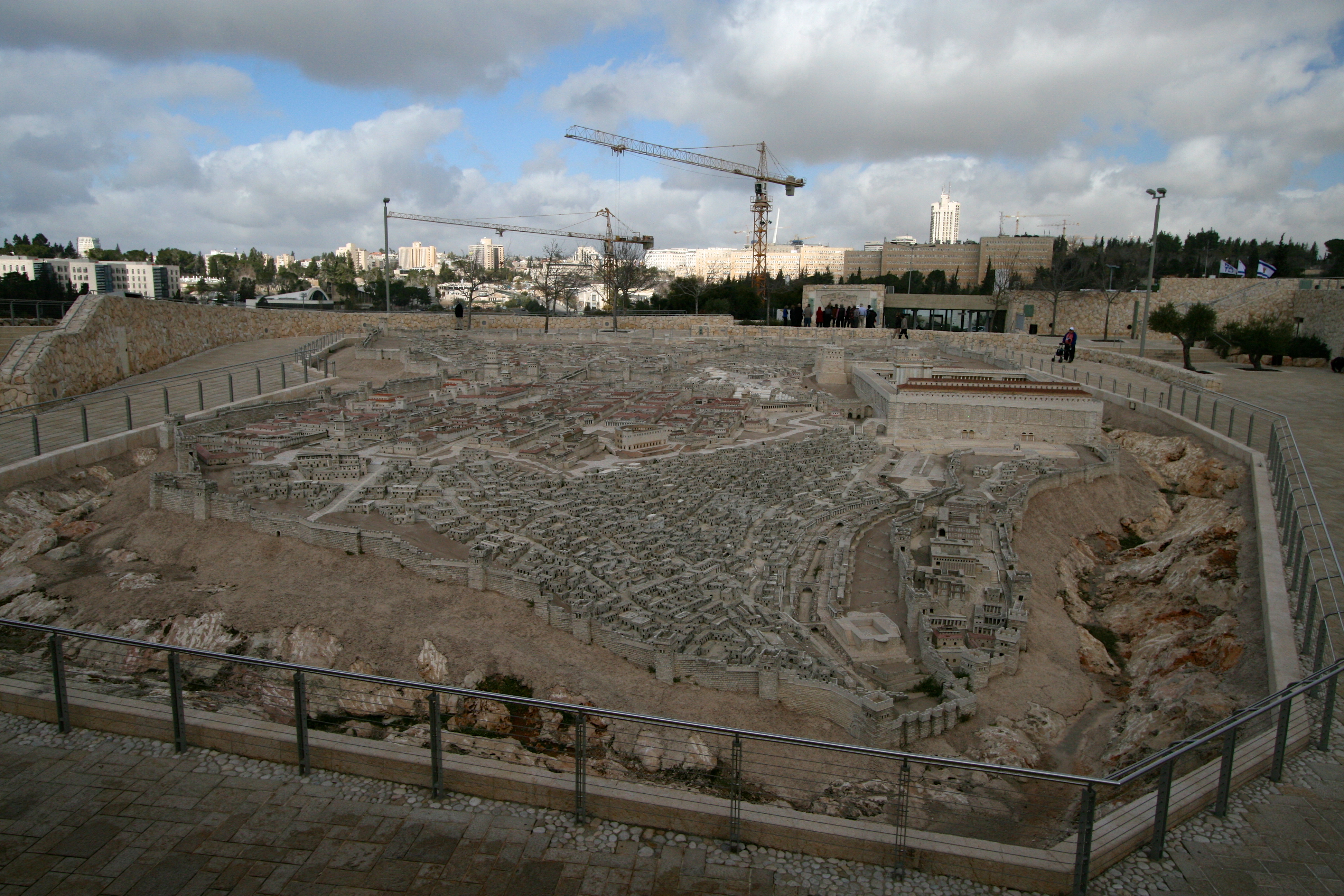
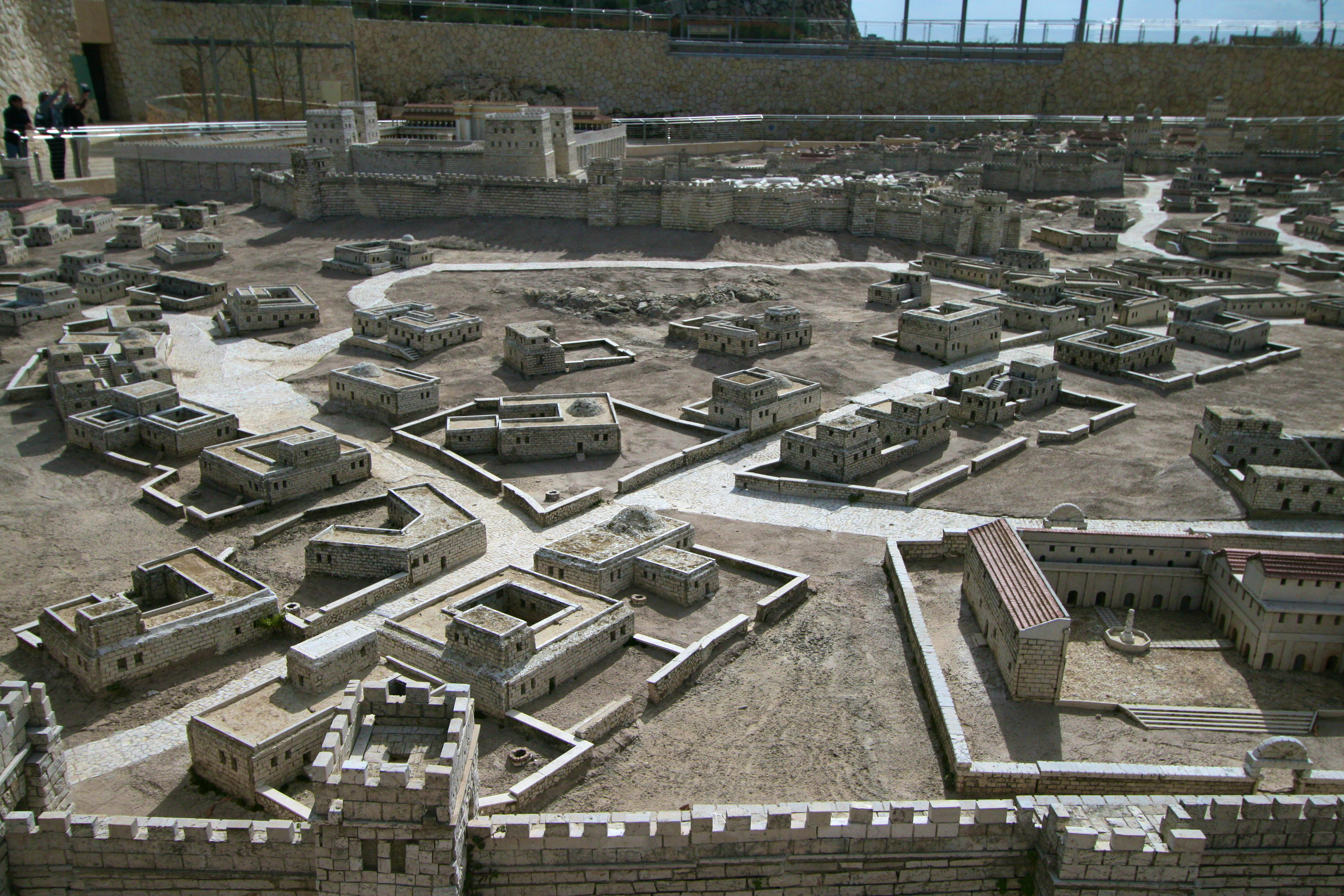
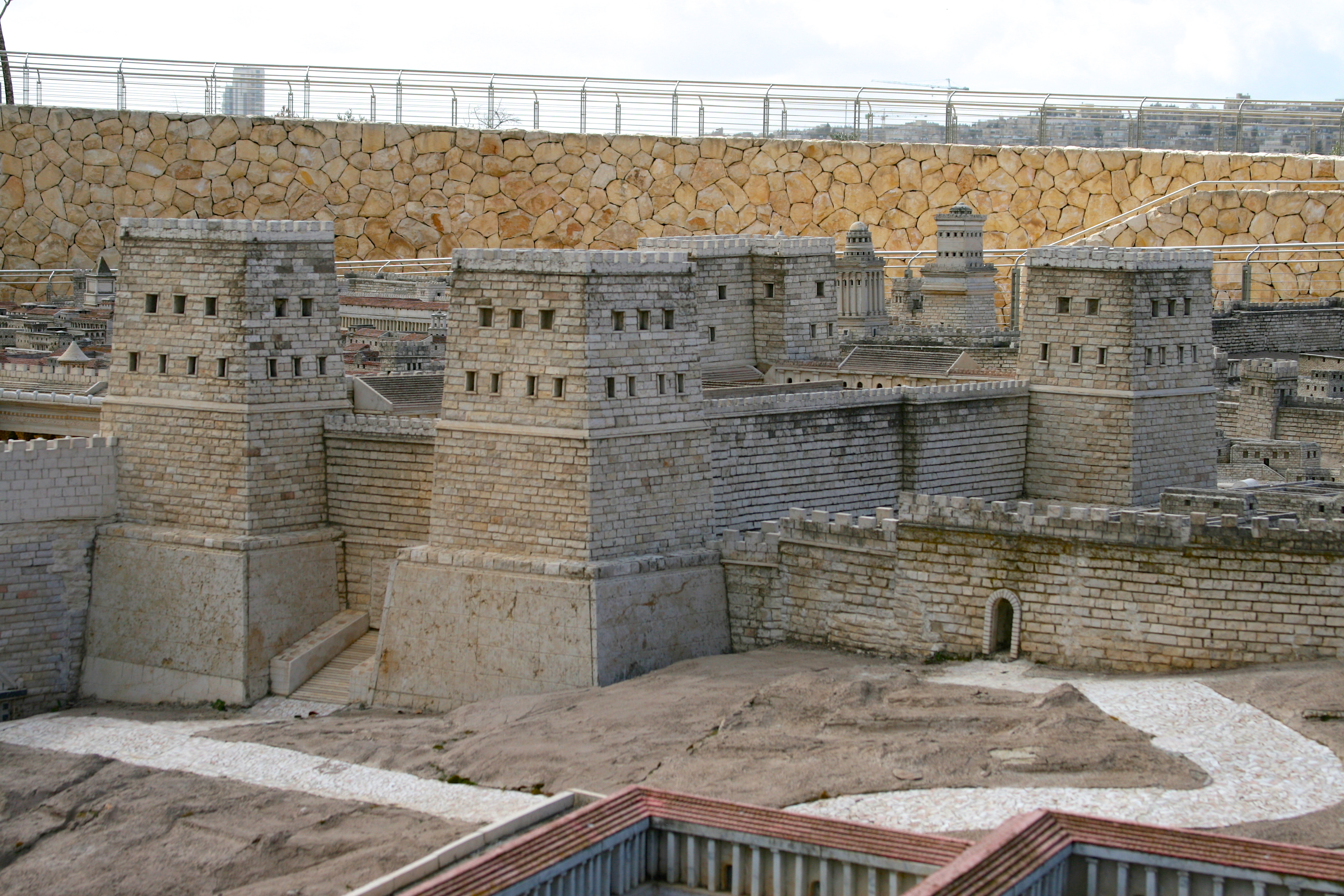
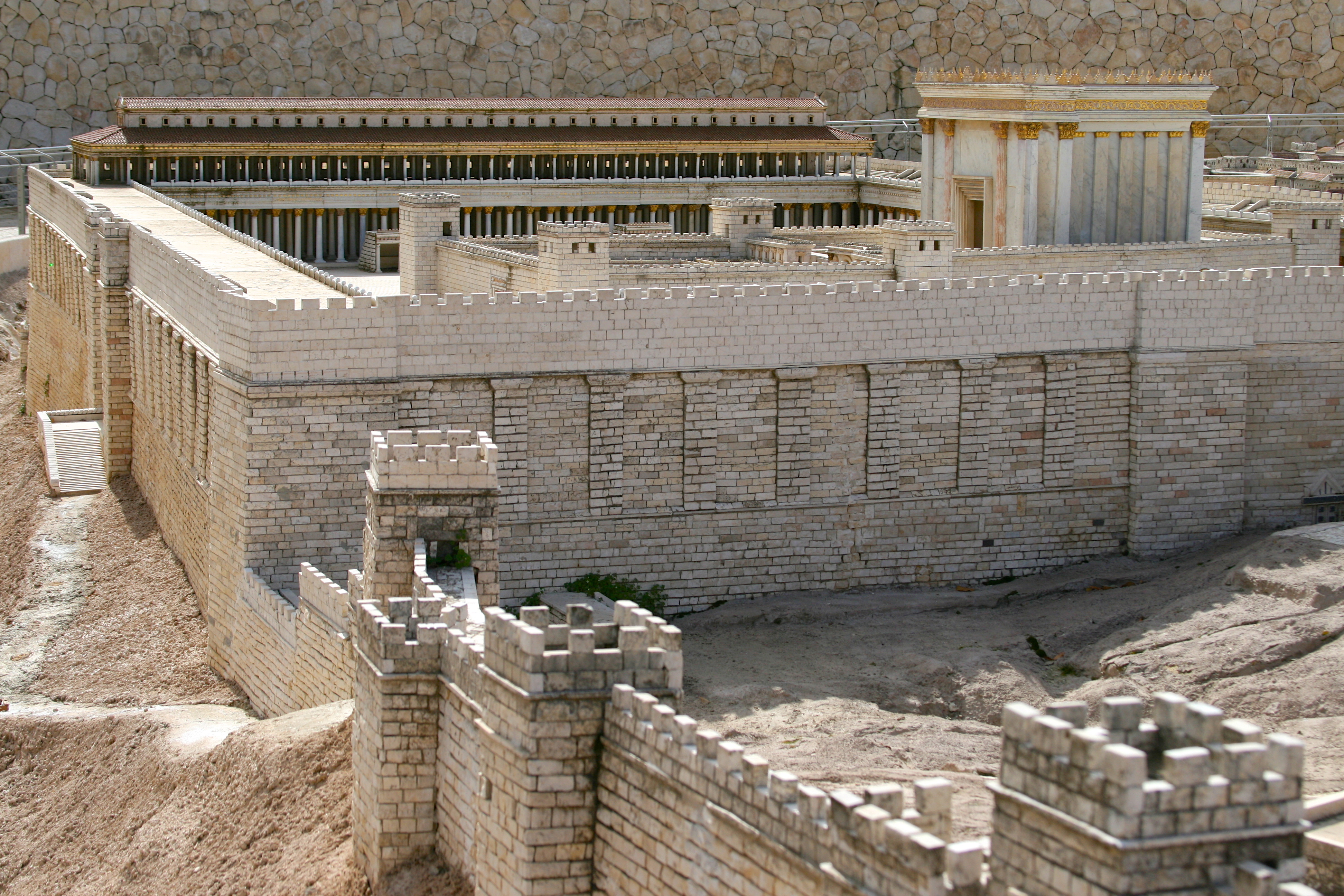
We then went to the Israel Museum where there is a detailed, very large scale model of the city of Jerusalem from Jesus’ day. It was very beautiful, helpful, and interesting to have this visual overview of the layout of the city. Many details of the city came alive in our minds with this spectacular display! Also there was more information of the Dead Sea Scrolls some of the actual non-canonical scrolls on display.
IMG_0673

IMG_0679

[caption id="attachment_191" align="alignnone" width="3888"]IMG_0684 The Antonia Fortress was a military barracks built around 35 BC by Herod the Great . The fortress was built on the northeastern side of the city, near the Temple Mount and the Pool of Bethesda.[/caption]


[caption id="attachment_192" align="alignnone" width="3888"]IMG_0685 How the Jewish Temple would have looked on the Mount[/caption]


Then on to the Holocaust Museum (Yad Vashem) –  As the Jewish people’s living memorial to the Holocaust, Yad Vashem safeguards the memory of the past and imparts its meaning for future generations. It was stablished in 1953 as the world center for documentation, research, education and commemoration of the Holocaust.  While the Nazi persecution of the Jews began in 1933, the mass murder was committed during World War II. Over a 4 year period  at least 6 million Jews, including 1.5 million children, were murdered.  There was a separate museum to commemorate the lost children. A darkened room illuminated by a single candle in the center of the room, but magnified by a multitude of prisms and mirrors that scattered thousands of points of light around the room, was the setting.  A continuous recording, which read the names of the children in English, Hebrew, and Aramaic, was played - it was said that it takes 3 1/2 years for all of the names to be read.  The museum was both horrifying and sobering.  The atrocities committed against the Jews were hard to imagine.  In a world of total moral collapse there was a small minority who mustered extraordinary courage to uphold human values. These were called the Righteous Among the Nations - individuals who acted in the face of the atrocities to assist  by hiding Jews, providing false identities or false papers, smuggling or assisting Jews to escape, and saving children.  They stood in stark contrast to the mainstream of indifference and hostility that prevailed during the Holocaust. Contrary to the general trend, these rescuers regarded the Jews as fellow human beings who came within the bounds of their universe of obligation. They are given special recognition within the museum and, interestingly, they have been offered Jewish citizenship as a result of their actions.  We took no pictures within this memorial.


Our last stop of the day was Bethlehem – the city of Jesus’ birth. This city is now primarily an Arab city, under Palestinian control. So we had to go through a security checkpoint and even got a new guide, Ramzi.  Since our original guide, David, is Jewish and serves in the Israeli reserves, he could not accompany us into the city. The population of the modern city is about 35,000 and is 80% Muslim and 20% Arab Christian.

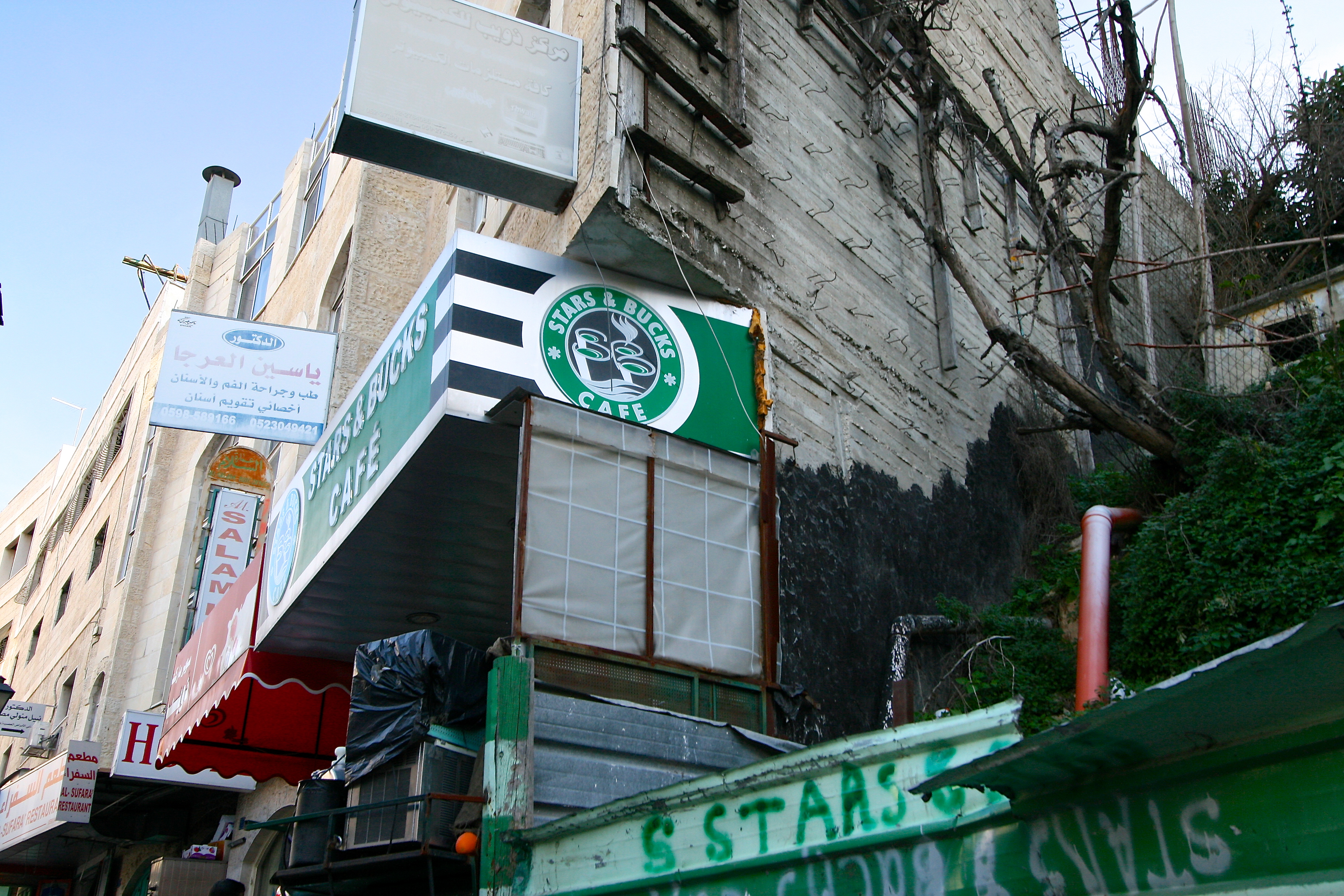
[caption id="attachment_193" align="alignnone" width="3888"]IMG_0690 Wonder if Starbucks is aware of this copyright infringement?[/caption]

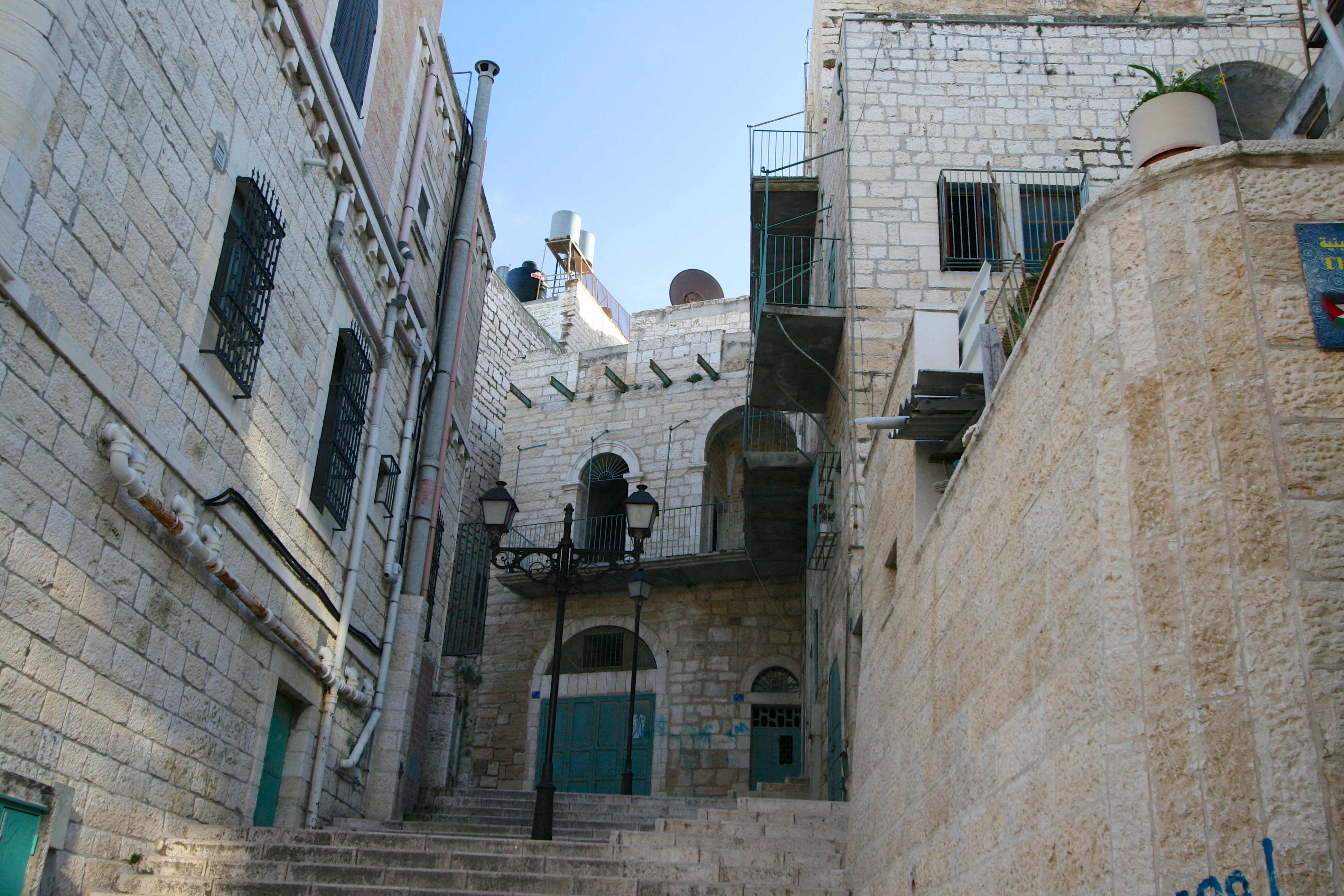
We drove down Nativity Street which it is believed to be the road that Mary and Joseph would have taken as they entered the city.


[caption id="attachment_194" align="alignnone" width="3888"]IMG_0691 Dwellings along Nativity Street[/caption]


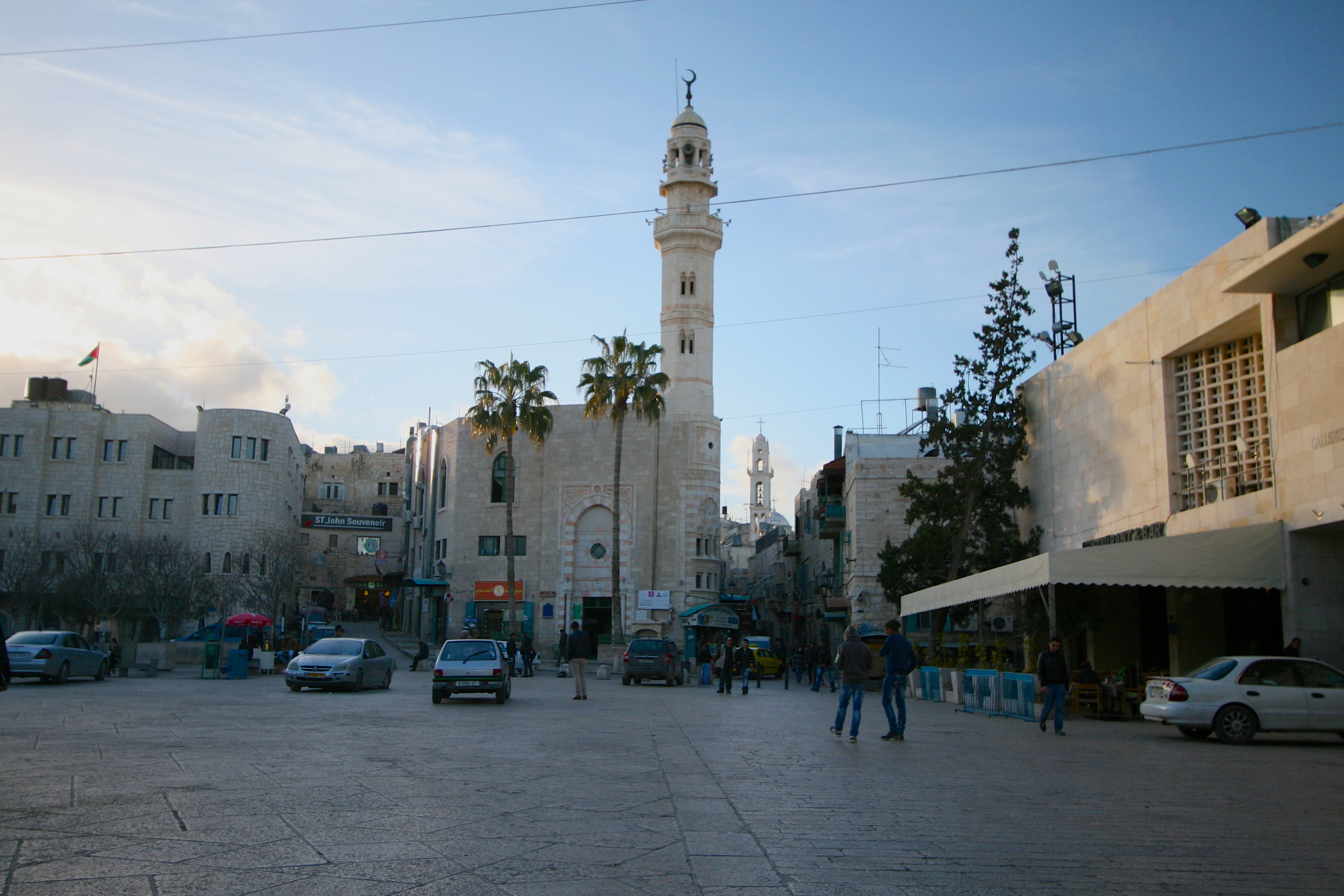
[caption id="attachment_196" align="alignnone" width="3888"]IMG_0702 Downtown plaza near the church[/caption]


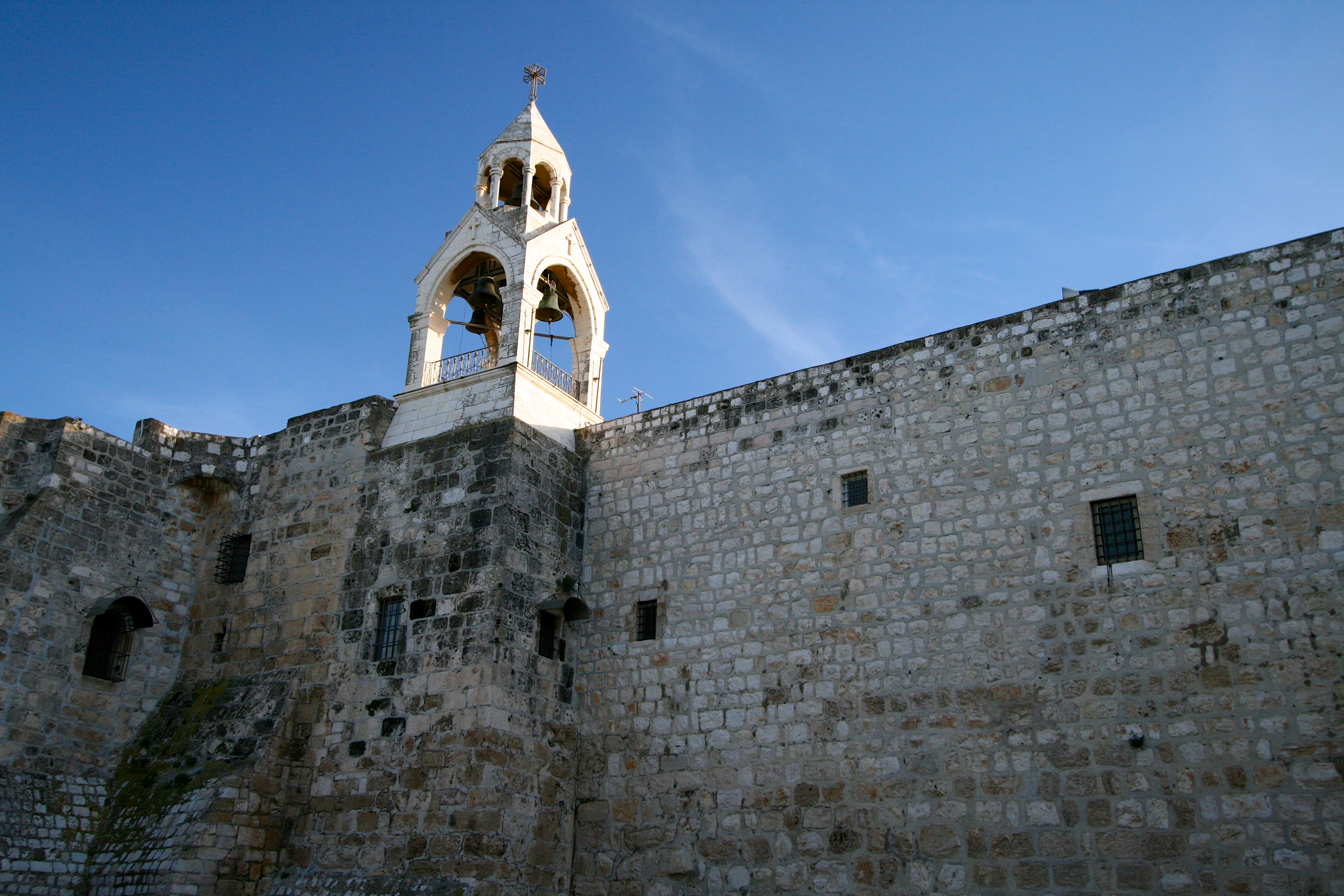
We stopped at the Church of the Nativity where a cave that is believed to be where Jesus was born is located. The church is owned by three denominations – Greek Orthodox, Armenian, and Catholic. This is the oldest church that is still in use in the world! The church is built over the cave, or grotto, where His birth took place.


[caption id="attachment_195" align="alignnone" width="3888"]IMG_0696 Church of the Nativity[/caption]

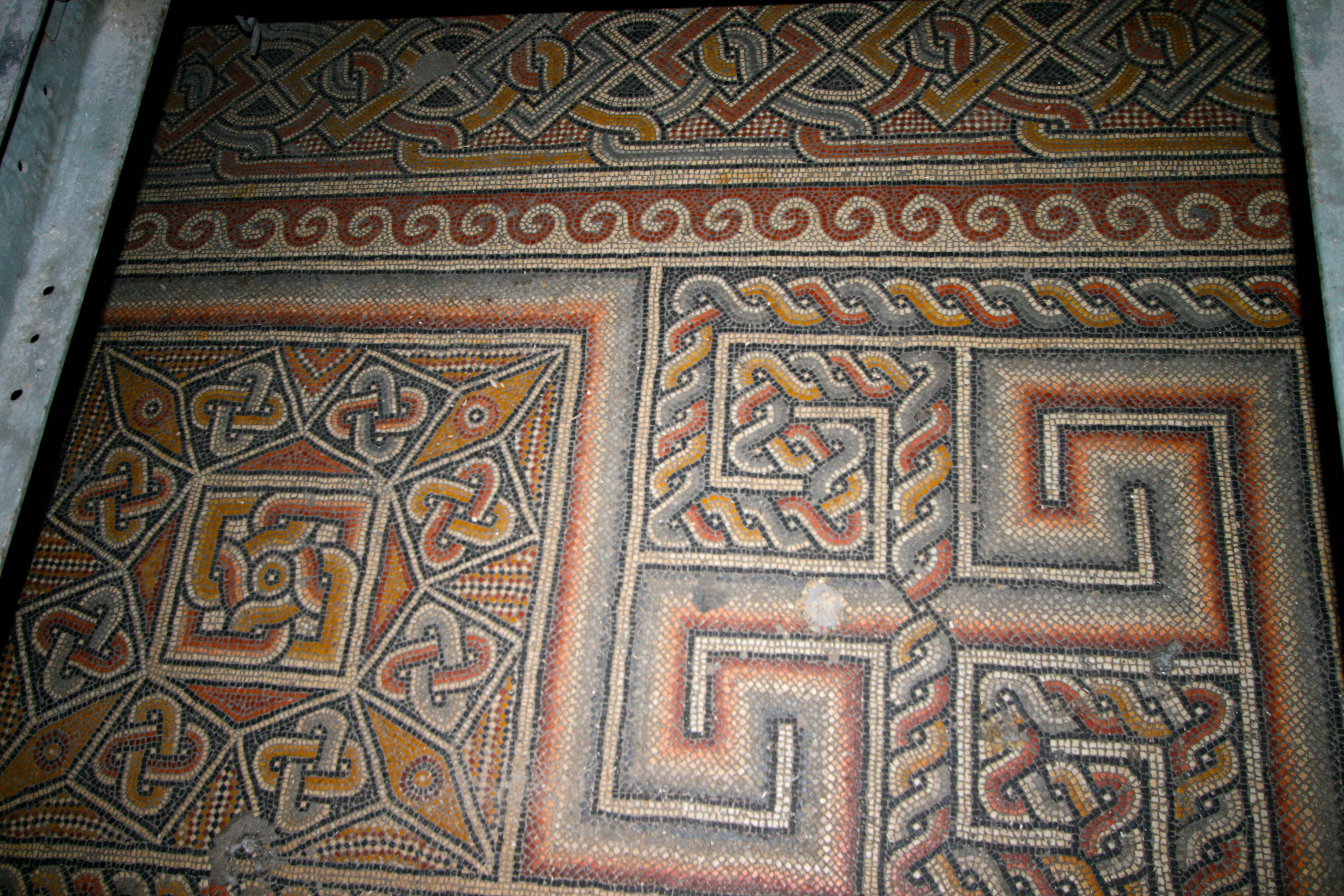
[caption id="attachment_197" align="alignnone" width="3888"]IMG_0714 Original mosaic floor of the church[/caption]


The last stop of the day was to view Shepherd’s Field – a grassy, rocky slope that may have been the place where the shepherds would have been tending their sheep on that glorious night when the angels’ pronouncement was made! “Glory to God in the Highest and on earth, peace, good will to men!”  Baby Jesus, born of a virgin, who came to die for the sins of men.

[caption id="attachment_198" align="alignnone" width="3888"]IMG_0722 View of the hillside - sorry for the blur[/caption]


We then stopped at an Arab Christian shop that produced and sold various articles made of wood from the many olive trees in that region. Finally we proceeded back through the checkpoint, which took 45 minutes, and headed back to Jerusalem.

After returning to the hotel, I had the privilege to go with Sheri to the house of her friend that lives here in Jerusalem. Kay is British and is married to an Arab Christian who teaches Theology at Bethlehem Bible College. She sells handmade items from the “marginalized” people from Bethlehem. Life is very, very hard for the Arab Christians in Bethlehem – they are often shunned by the predominantly Arab Muslims in the city and must live in isolation because of the tight control of the city’s access by the Israelis.  She buys their handmade items to provide an income for them and then sells the items outside of Bethlehem for a profit; she then gives the profits to aid the Palestinian refugees. The items were beautiful, but not nearly as beautiful as her honest, humble heart and being in her gracious home.


Once again, a late bedtime with an early rising in the AM.


Lila tov


Friday, February 6, 2015

Day 6

Today we spent the entire day in the city of Jerusalem. There was so much that we saw and so much information to digest, I am not sure that I will come close to explaining 25% of it. I will try to hit the highlights and Jeff will, as usual, fill in the rest. It is 10 PM and my feet are tired, as well as my body and brain.

We were dropped off at the south gate (known as the dung gate) of the southern wall through which we entered the old city of Jerusalem. The city is comprised of 4 quarters – the Muslim, Jewish, Christian, and Armenian quarters. Security was tight and we entered through a security checkpoint, then heard an overview of the history of the temple area, beginning with Abraham and through to present day.

[caption id="attachment_147" align="alignnone" width="3888"]Southern Gate Southern Gate[/caption]

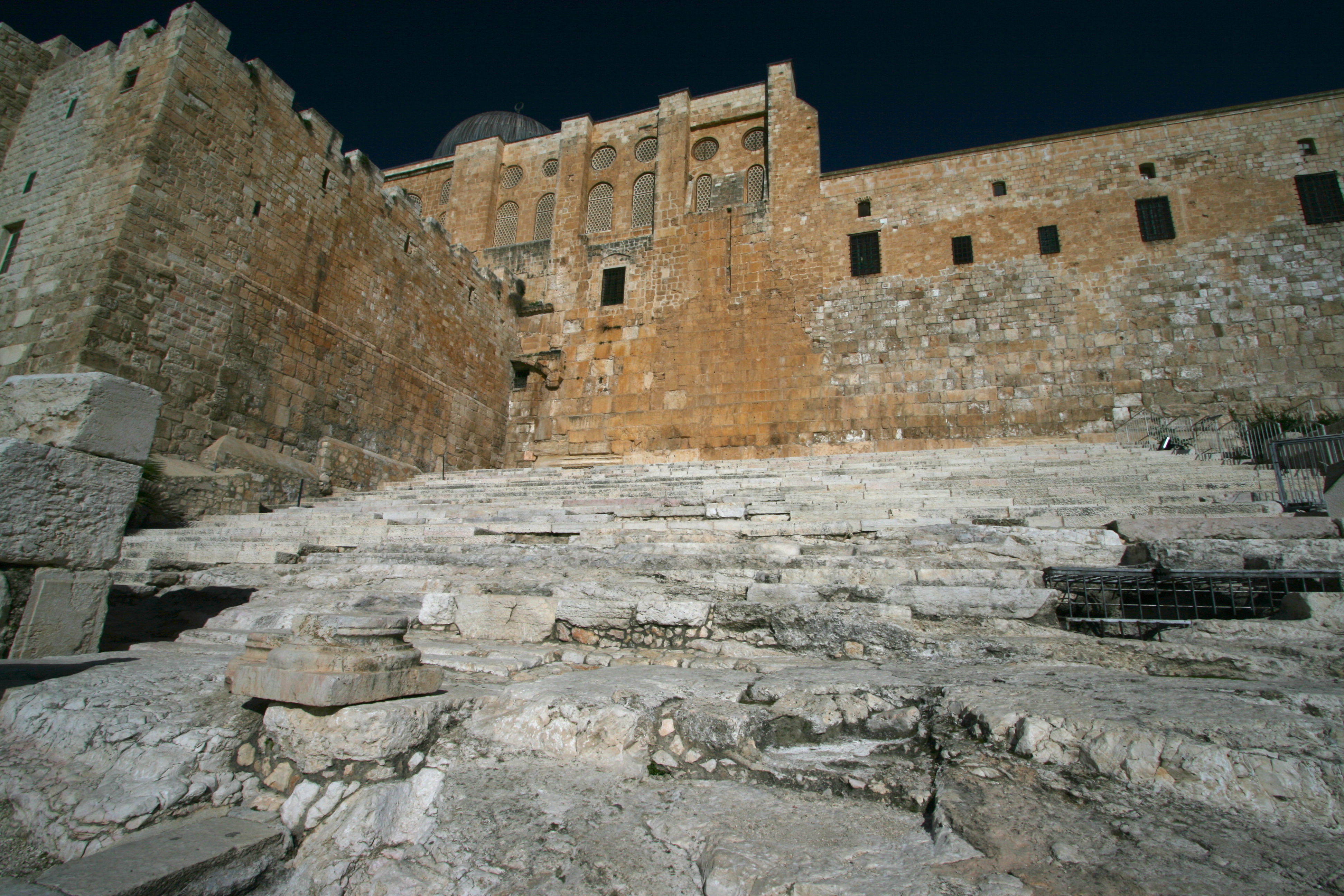
Then we walled a short distance to the Southern Steps that lead up to the temple. This would have been the entry point of the temple for all of the Jews in Jesus’ day. Up until today we had visited many areas where Jesus would have been near, but this is one area where we can say with certainty that we truly walked exactly where Jesus walked and taught. These are for certain the very steps that Jesus would have climbed when he came to Jerusalem, both as a child and as a man. It is still very hard to imagine that I was actually there where Jesus had been. Humbled and grateful.

[caption id="attachment_153" align="alignnone" width="3888"]IMG_0534 The Southern Steps[/caption]


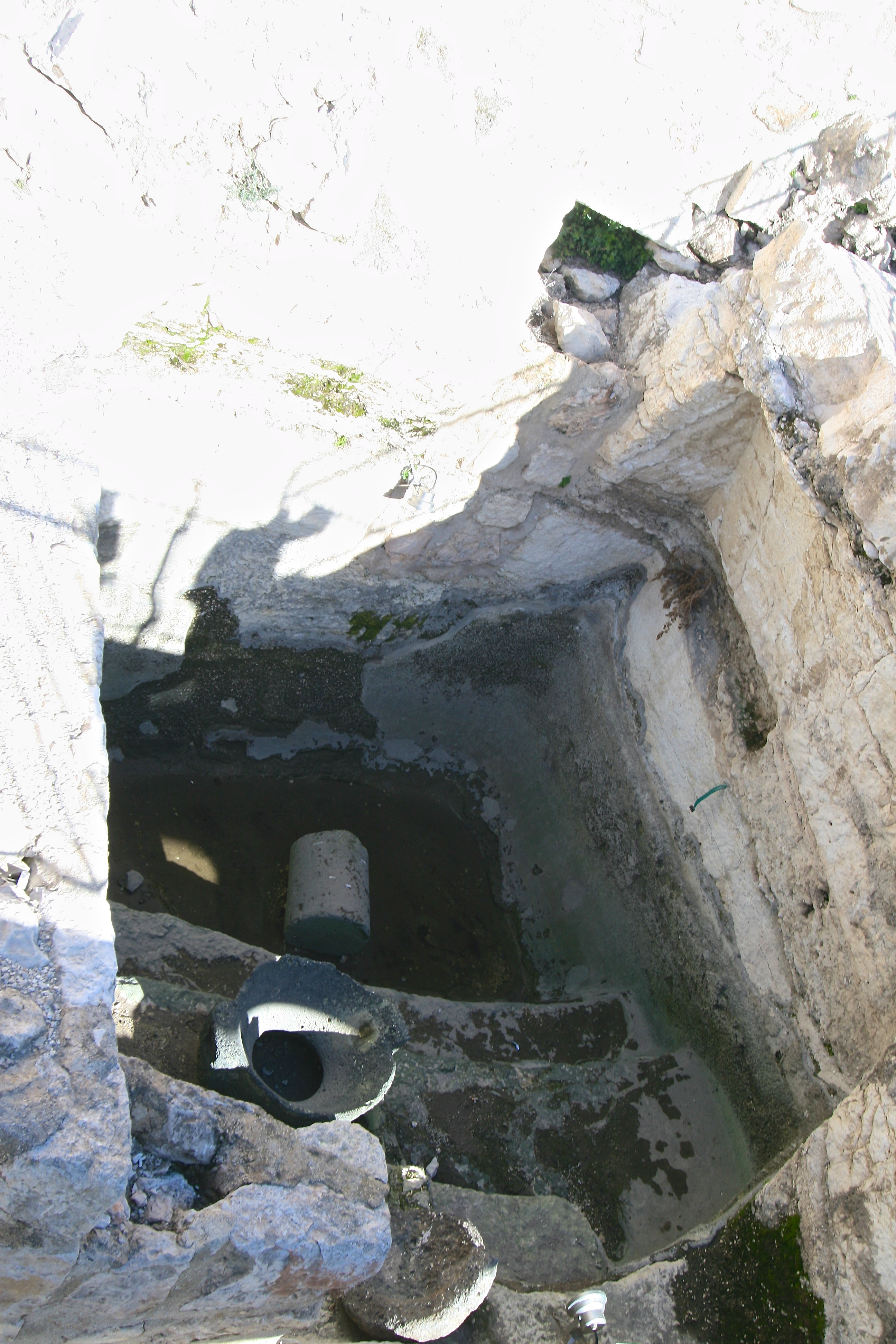
[caption id="attachment_149" align="alignnone" width="2592"]IMG_0519 Ceremonial cleansing pool at the entrance to the steps. Jesus, ironically, would have used this for ritual cleansing prior to entering the temple.[/caption]

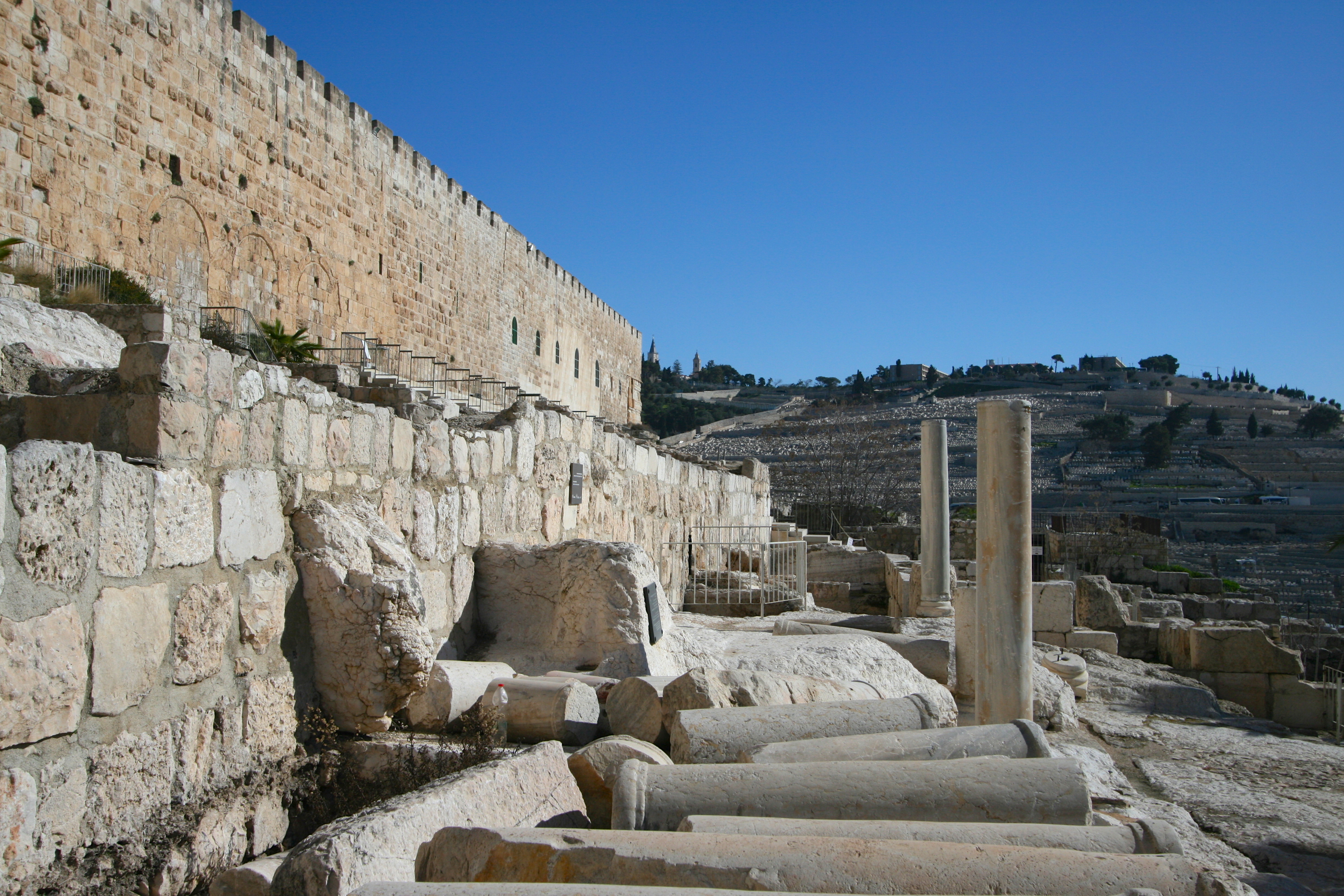
[caption id="attachment_150" align="alignnone" width="3888"]IMG_0521 View toward the Mount of Olives from the Southern Steps[/caption]

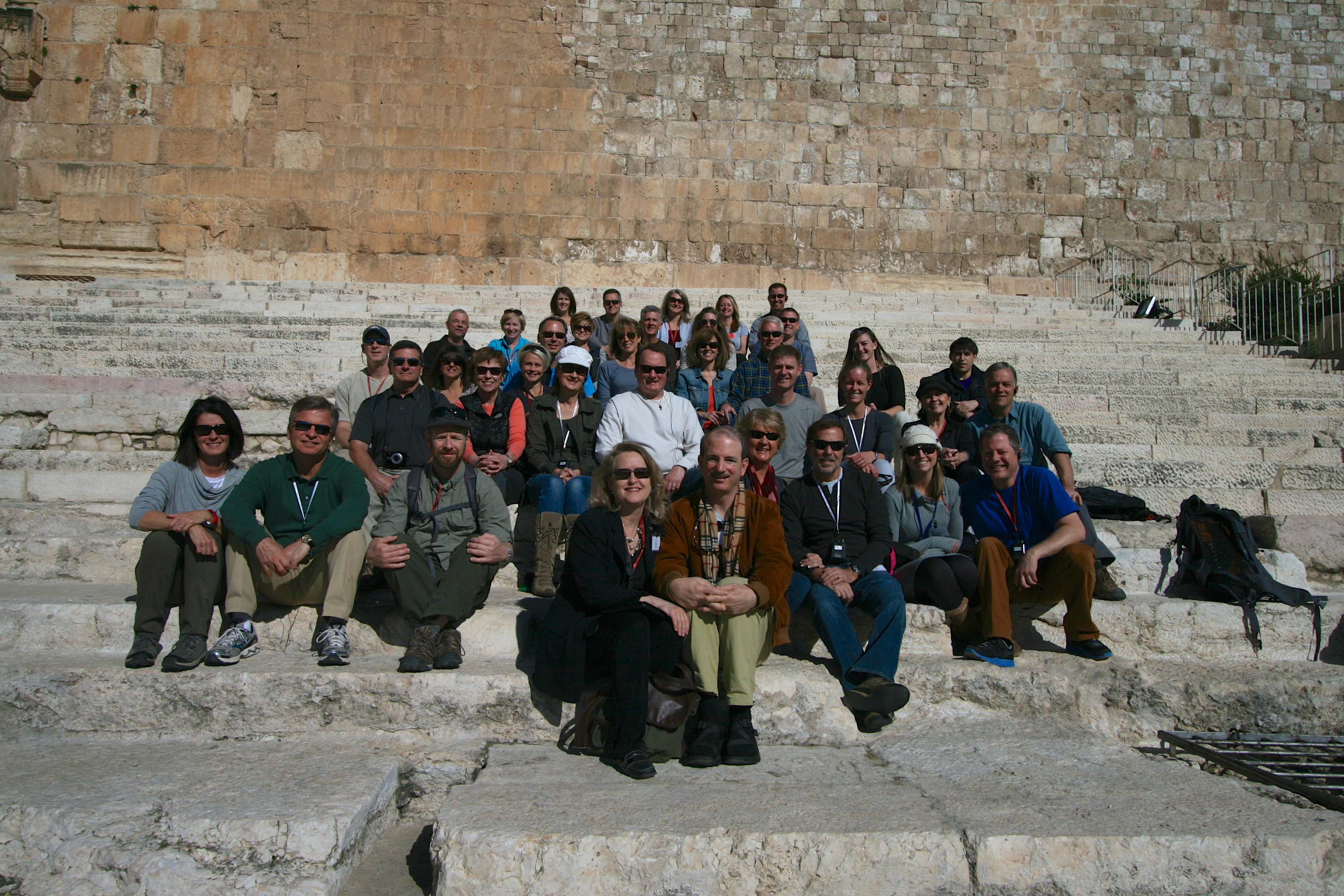
[caption id="attachment_151" align="alignnone" width="3888"]The Group on the Steps The Group on the Steps[/caption]

Next we went to the Western Wall of the temple mount, also known as the Wailing Wall. This is the only remaining, exposed portion of the actual retaining wall of the temple mount that the Jews can access, and is therefore a very sacred place for them; actually considered their most holy place.


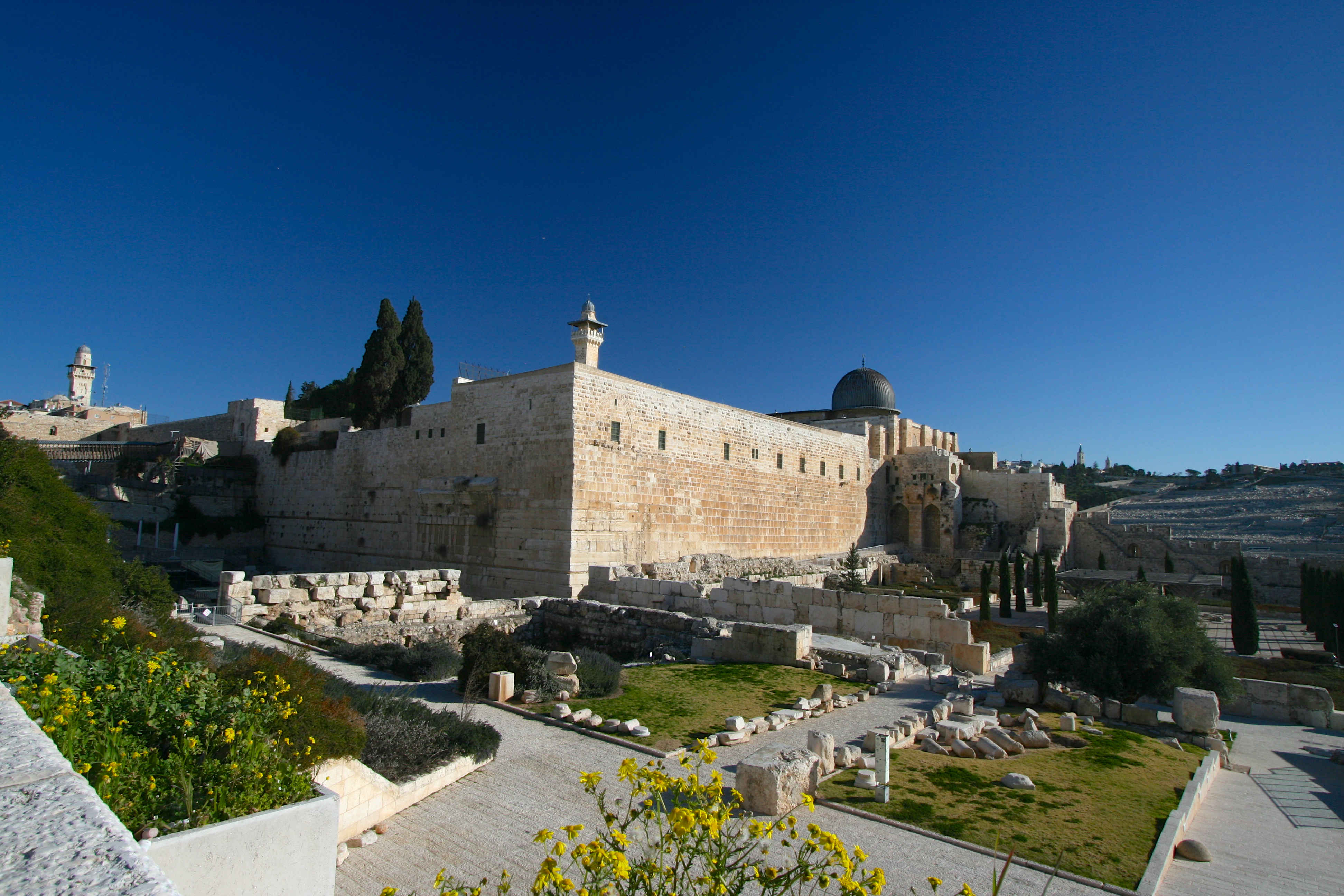
[caption id="attachment_148" align="alignnone" width="3888"]IMG_0510 Southwest corner of the Temple Mount wall; Southern Steps toward the right, Western (Wailing) Wall to the left[/caption]


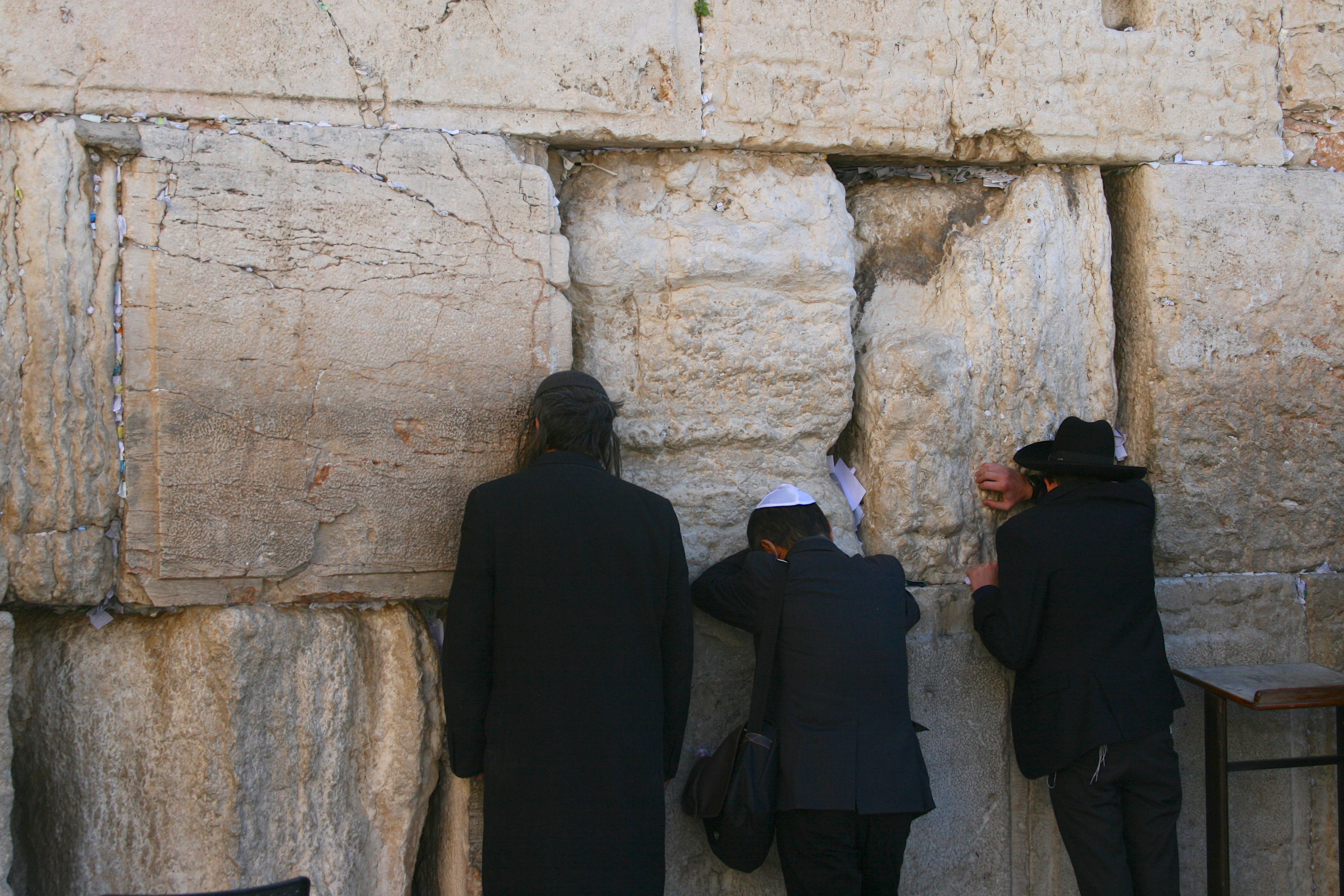
I really did not know much about this place and really had no expectations. [I know, unusual for me to have no expectations.] It is called the Wailing Wall because the religious Jews come here to the wall to pray and lament the destruction of the temple (by the Romans in 70 AD). The men and women have separate areas. All the men must have head-coverings. Jeff did not have one, so they provided a “cute” Yakima. There was loud wailing that could be heard coming from the men’s side. On the women’s side, as I entered I saw that the Jewish women were sitting or standing at various places. Some at the wall, some at a distance. Some were rocking back and forth. Some were reciting prayers out loud and some were silently moving their lips. Some merely bowed their heads and read. It is customary for them to write prayers, or really just anything, on small slips of paper and to place these in the cracks in the wall. Placing their prayers in the wall, they then back away from the wall and leave the area. Except for the waling coming from the men’s side, it was very quiet. I just sat at first in confusion. My heart was deeply saddened. My prayers were rising to my God, my Savior for them, that they might see the Light and come to know the Truth. The Messiah has come! Through Him our God lives in us and we are no longer in need of sacrifices or a temple.

[caption id="attachment_155" align="alignnone" width="3888"]IMG_0539 The Wailing Wall[/caption]

[caption id="attachment_156" align="alignnone" width="3888"]IMG_0546 Praying at the Wall; notice the notes pressed into the cracks[/caption]


We were then able to walk through the Western Wall tunnels, which tunnel under the existing Muslim Quarter along the base of the wall where ongoing excavation was taking place. We also saw a demonstration of the history of the temple and temple area –built by Solomon, rebuilt by Ezra and Nehemiah after the destruction of the original and after the Jewish exile, the building of the temple mount and the improvements by Herod the Great, the destruction by the Romans in 70 AD, and the building of the Dome of the Rock by the Muslims on the very spot where the temple had once stood. More on this history tomorrow.

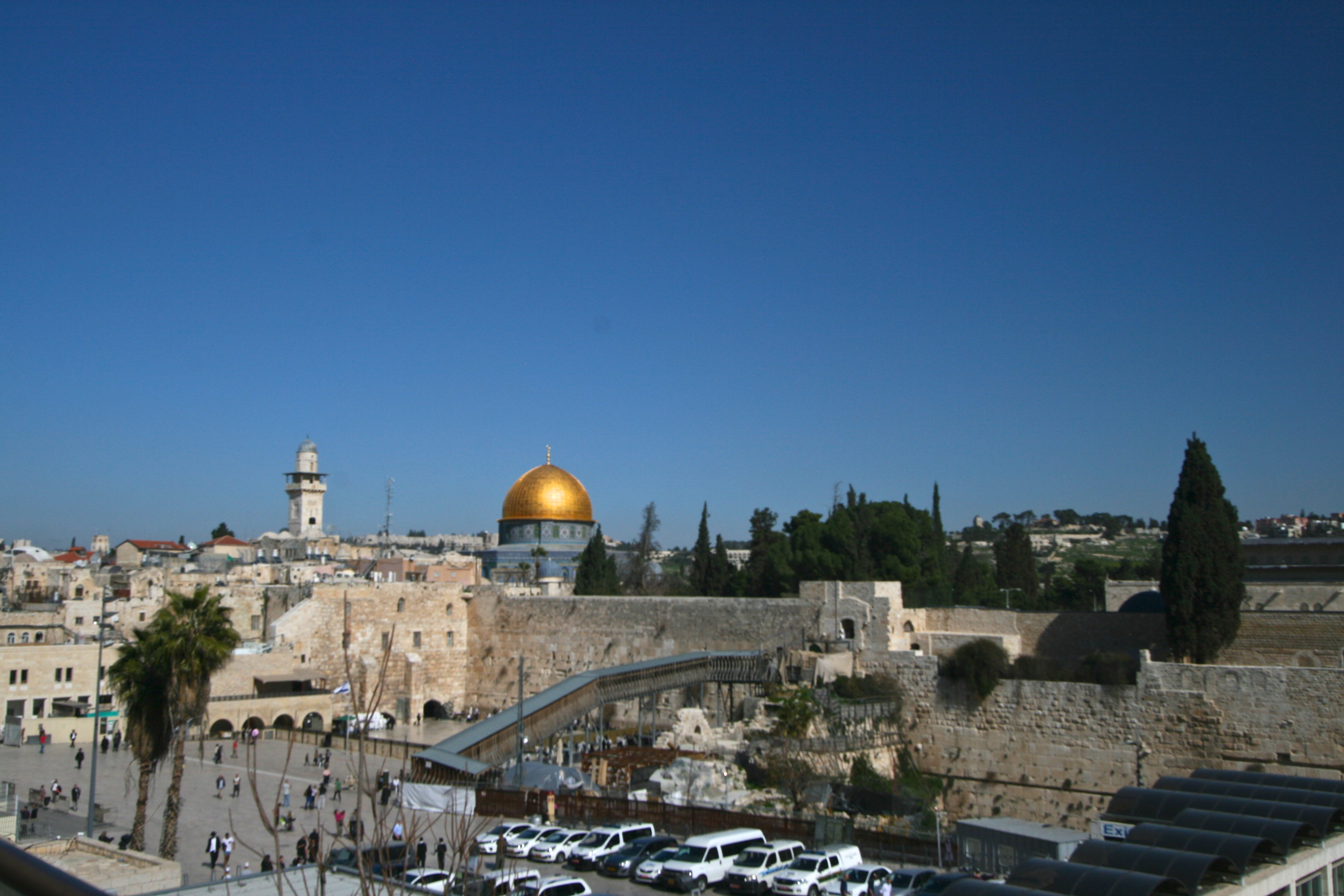
[caption id="attachment_157" align="alignnone" width="3888"]IMG_0555 View of the Western Wall-the covered walkway is the entrance to the top of the mount; the tunnel goes beneath the walkway and to the left along the wall under the Muslim Quarter, that is built over top and up against the wall[/caption]

Afterwards we left the temple area and went out into the old city, where we had one hour for lunch and shopping. Yay! Finally some shopping, if only for a short amount of time. It was a great way to enter into the culture and meet the people. We walked to the Armenian quarter and met a nice young man named Levan, ate pizza, and continued on for the day.

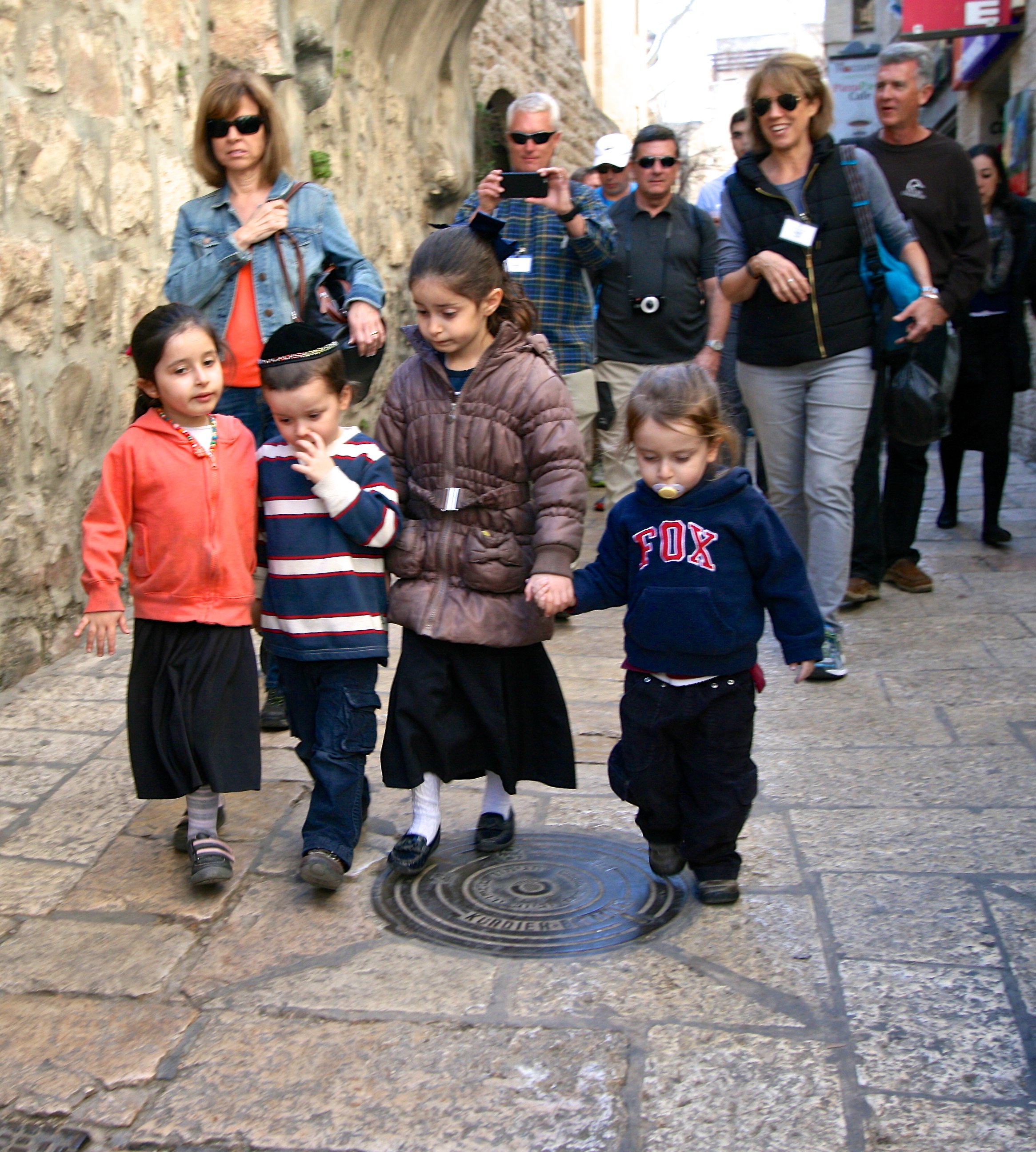
[caption id="attachment_160" align="alignnone" width="2331"]IMG_0565 Lots of school-age kids walking through the Jewish Quarter[/caption]


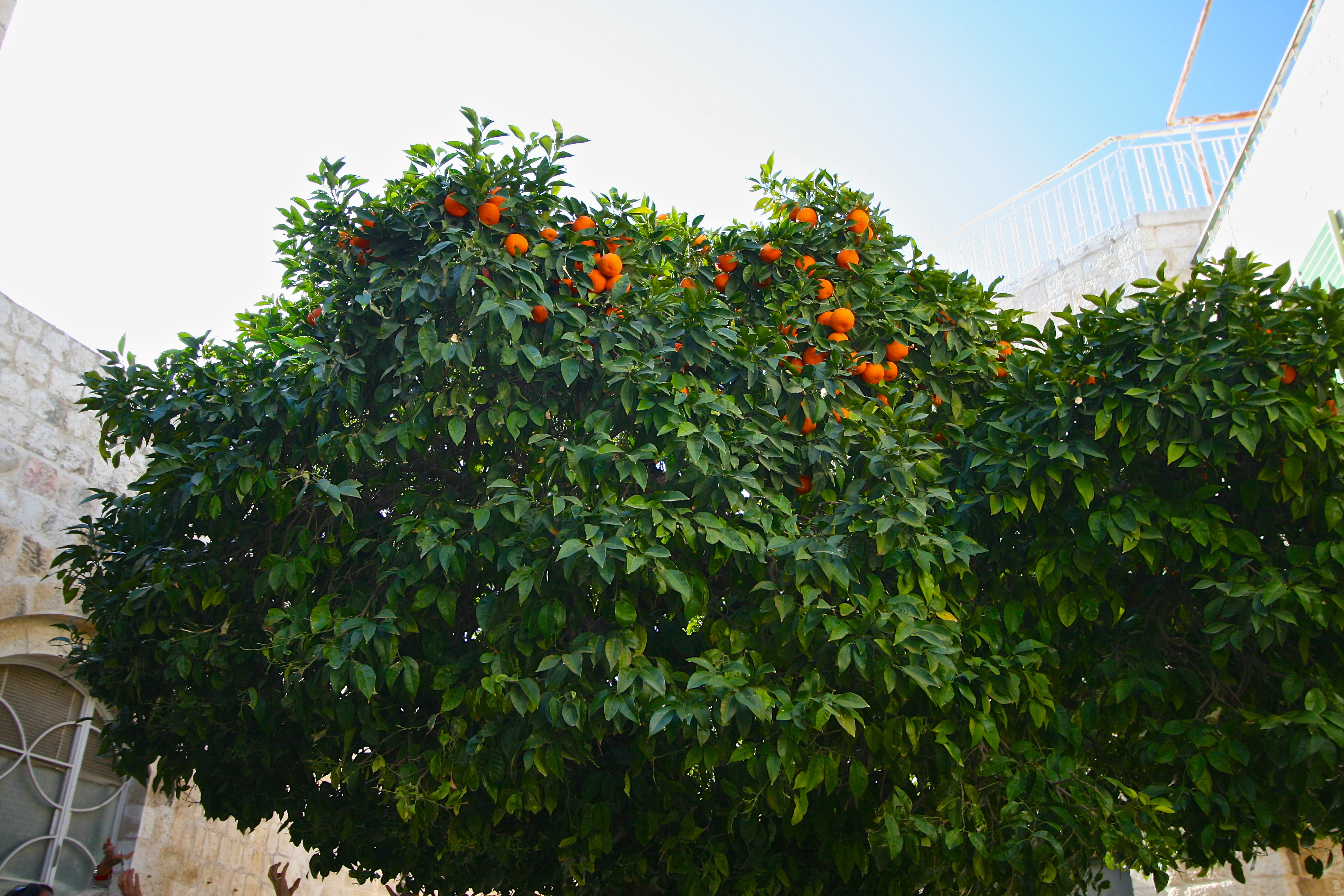
[caption id="attachment_161" align="alignnone" width="3888"]IMG_0566 Orange trees in a Jewish Quarter courtyard[/caption]

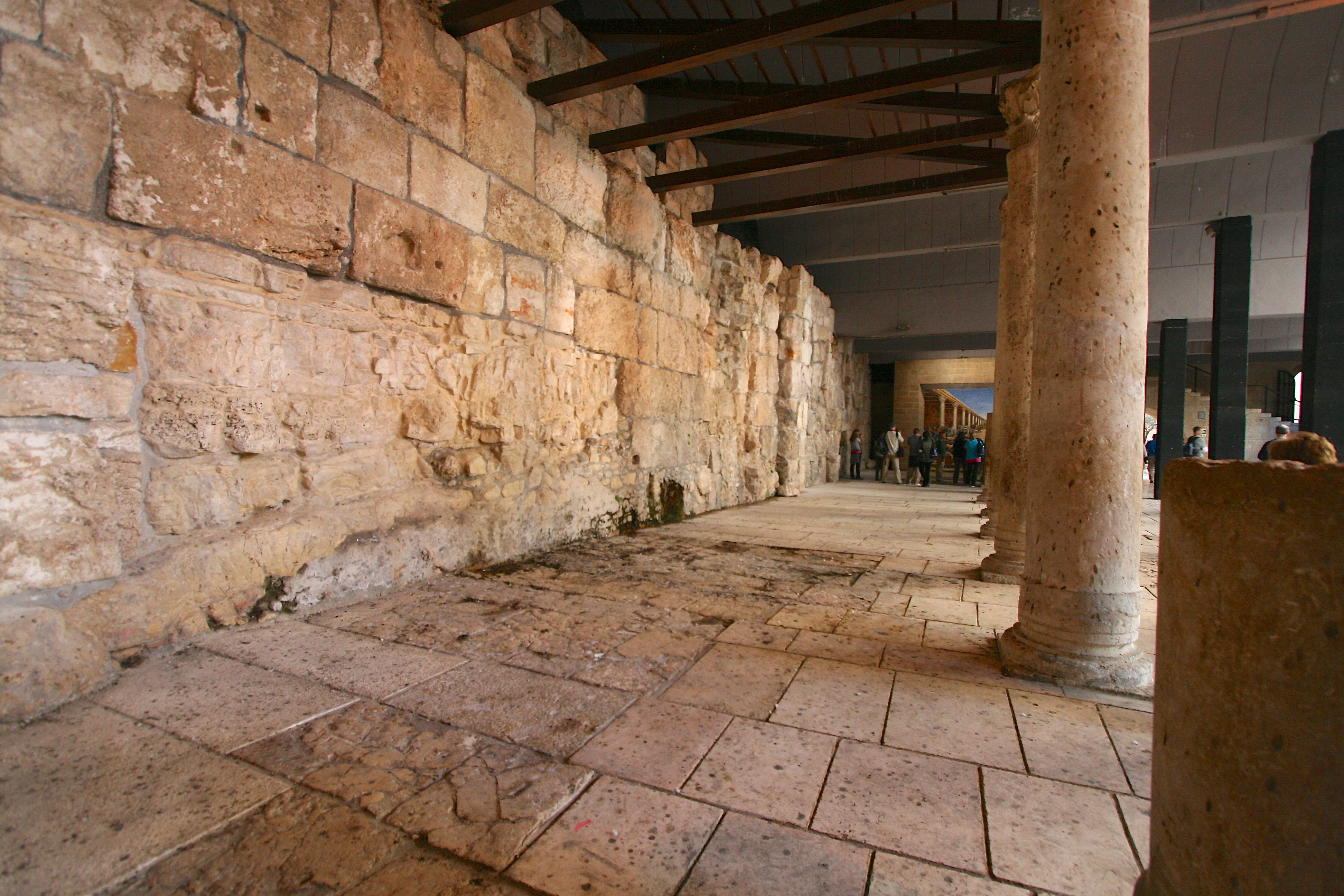
We walked south through the Jewish Quarter and viewed the original main road through the center of the Old City.  The wide central road was flanked by a covered portico/sidewalk.

[caption id="attachment_158" align="alignnone" width="3888"]IMG_0561 The original stone and columns of the road[/caption]


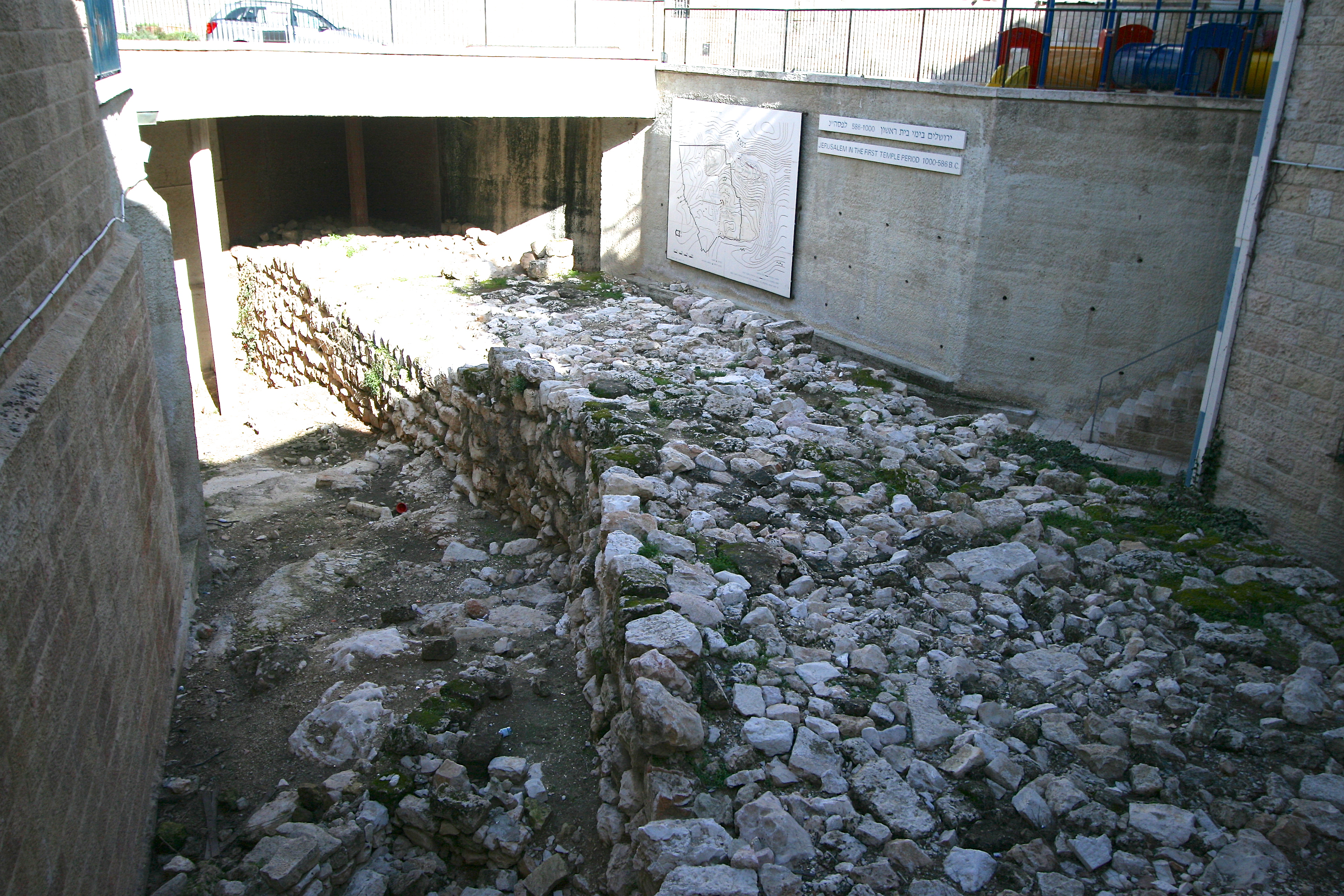
There is a portion of the wall that Hezekiah built in preparation for Judah's rebellion against Assyria (8th century BC). 2 Chronicles 32:3-5, 2 Kings 20:20 The remains of this wall were discovered in the Jewish Quarter of the Old City in 1970. It is about 23 feet thick and still stands up to 10 feet tall.

[caption id="attachment_159" align="alignnone" width="3888"]Hezekiah's Wall Hezekiah's Wall[/caption]

We saw the actual wall and then walked to the City of David – the original city that King David conquered and established as his capital. This city is actually outside the existing walls of Jerusalem.

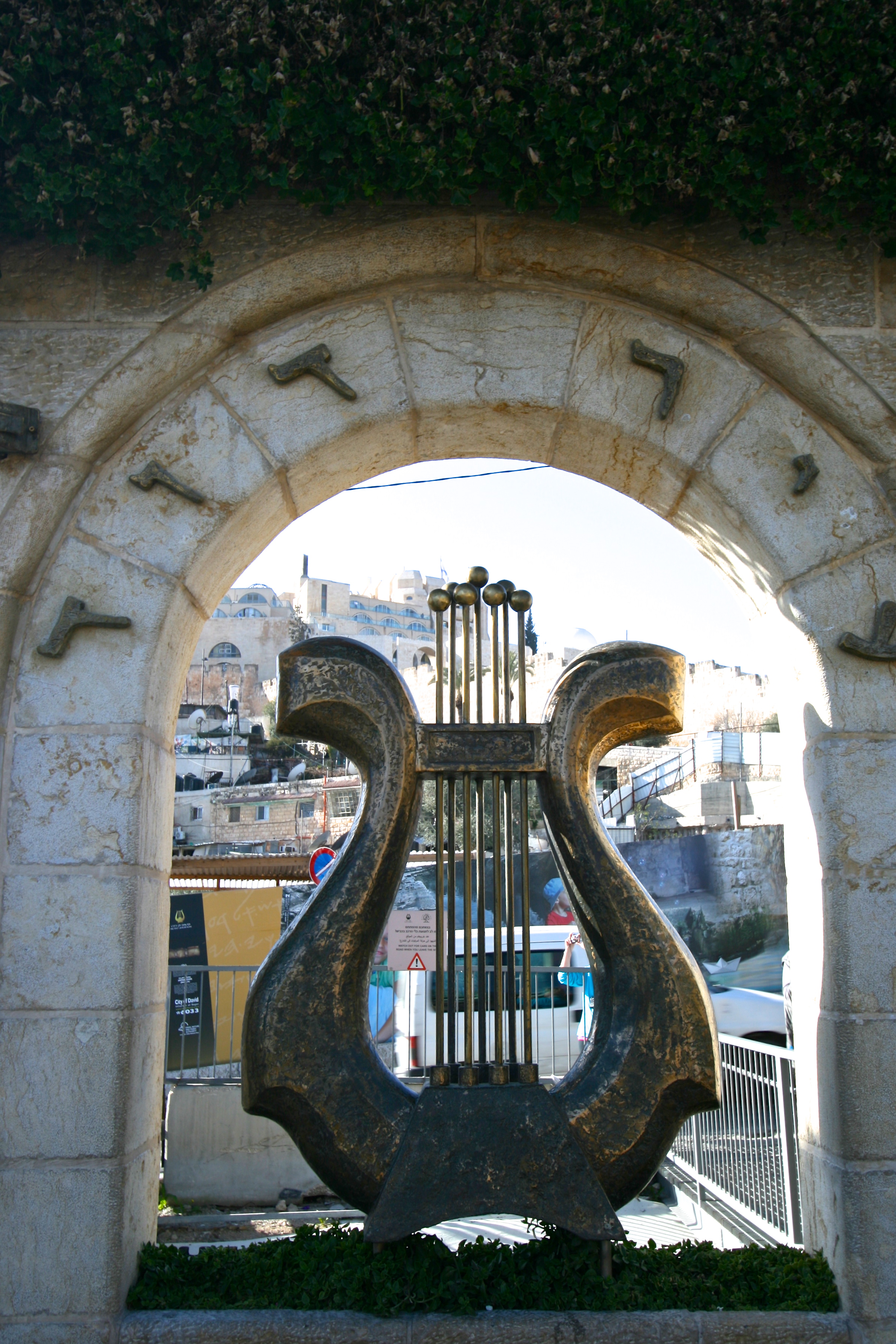
[caption id="attachment_162" align="alignnone" width="2391"]IMG_0569 Sculpture on entrance to the City of David[/caption]

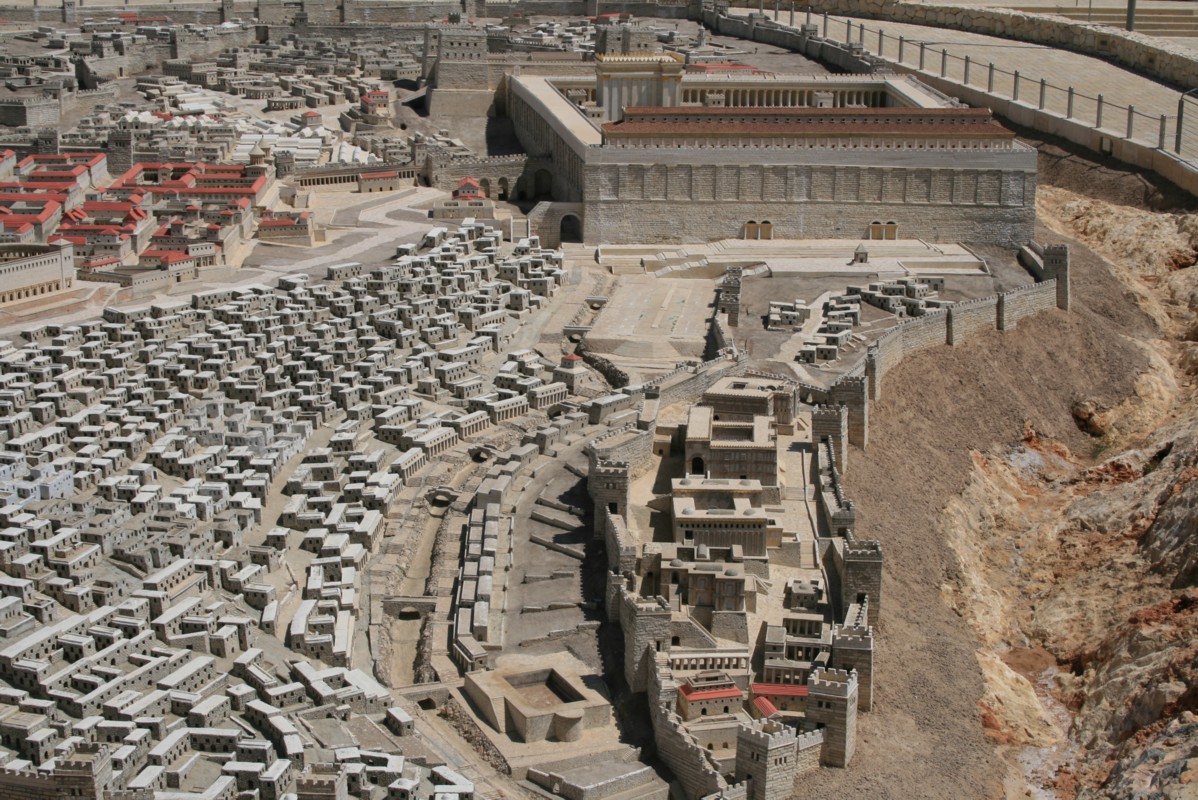
[caption id="attachment_216" align="alignnone" width="1198"] Model of the ancient City of David in foreground and how it related to the eventual expansion of the city of Jerusalem. At the top is the Temple Mount (built on what was Mount Moriah in David's day), to the right of the city is the Kidron Valley, along the left side the Central Valley (also know as Valley of the Cheesemakers)[/caption]


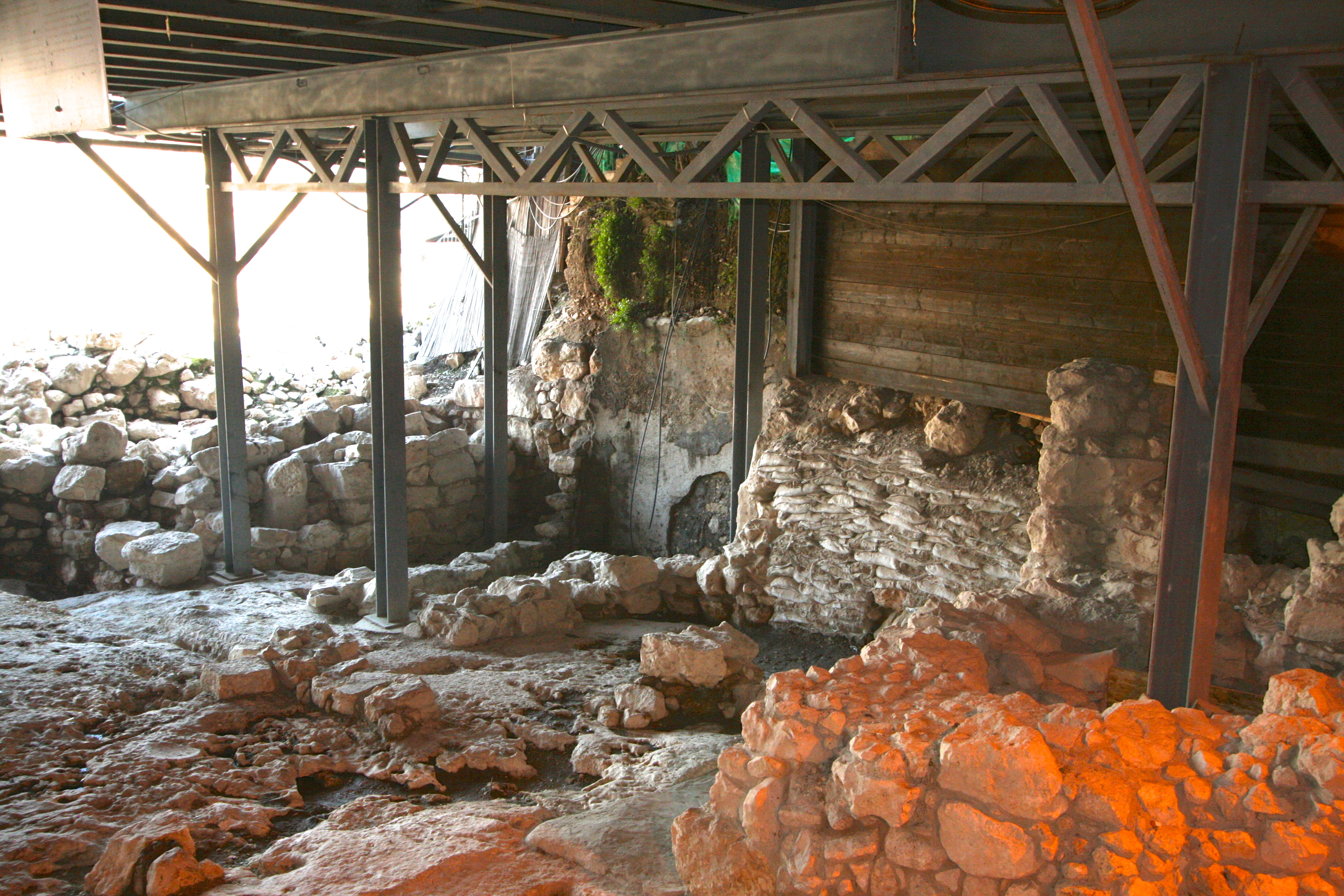
[caption id="attachment_165" align="alignnone" width="3888"]IMG_0577 Excavation of City of David[/caption]

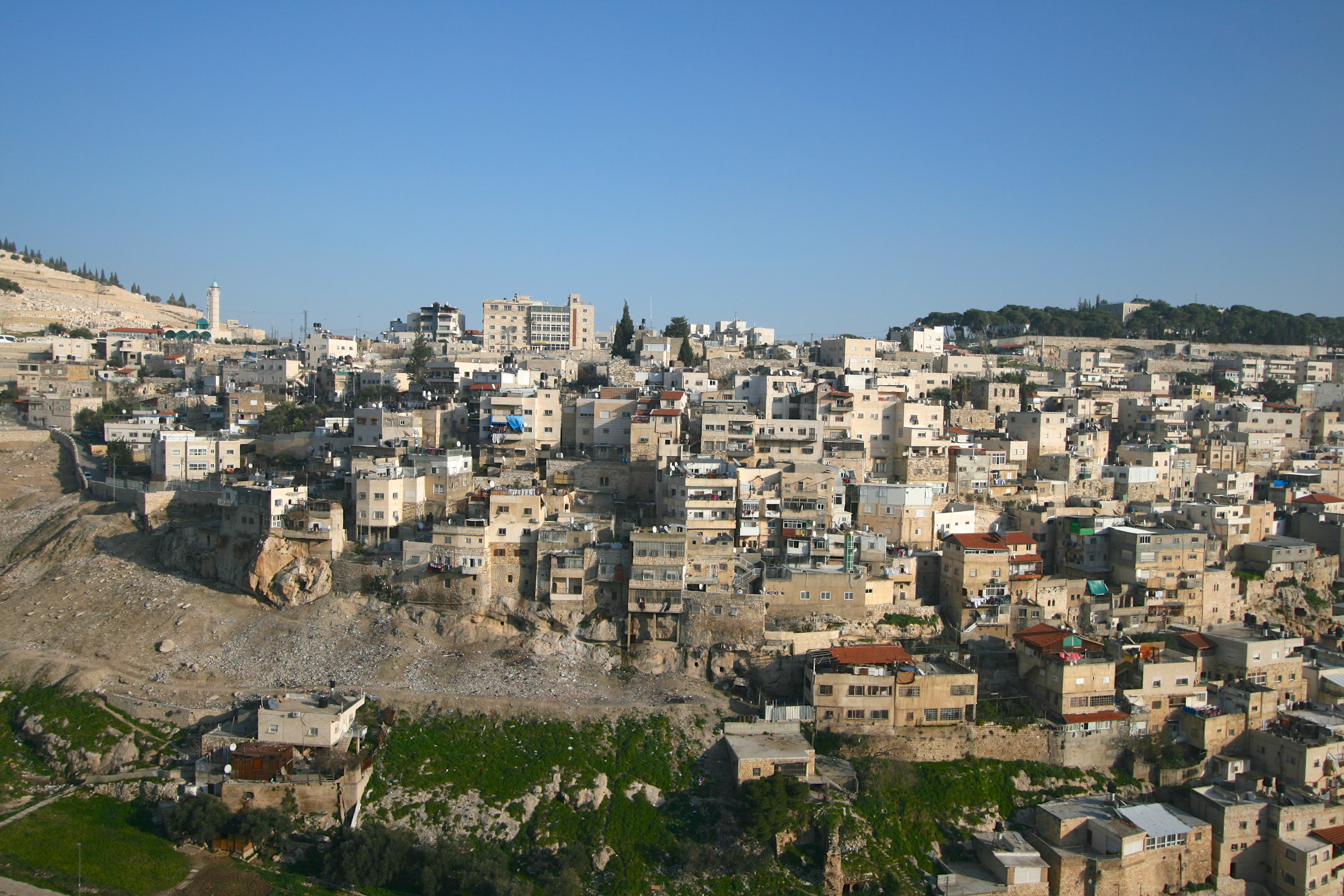
[caption id="attachment_163" align="alignnone" width="3888"]IMG_0570 View of the Modern City of Jerusalem from City of David[/caption]

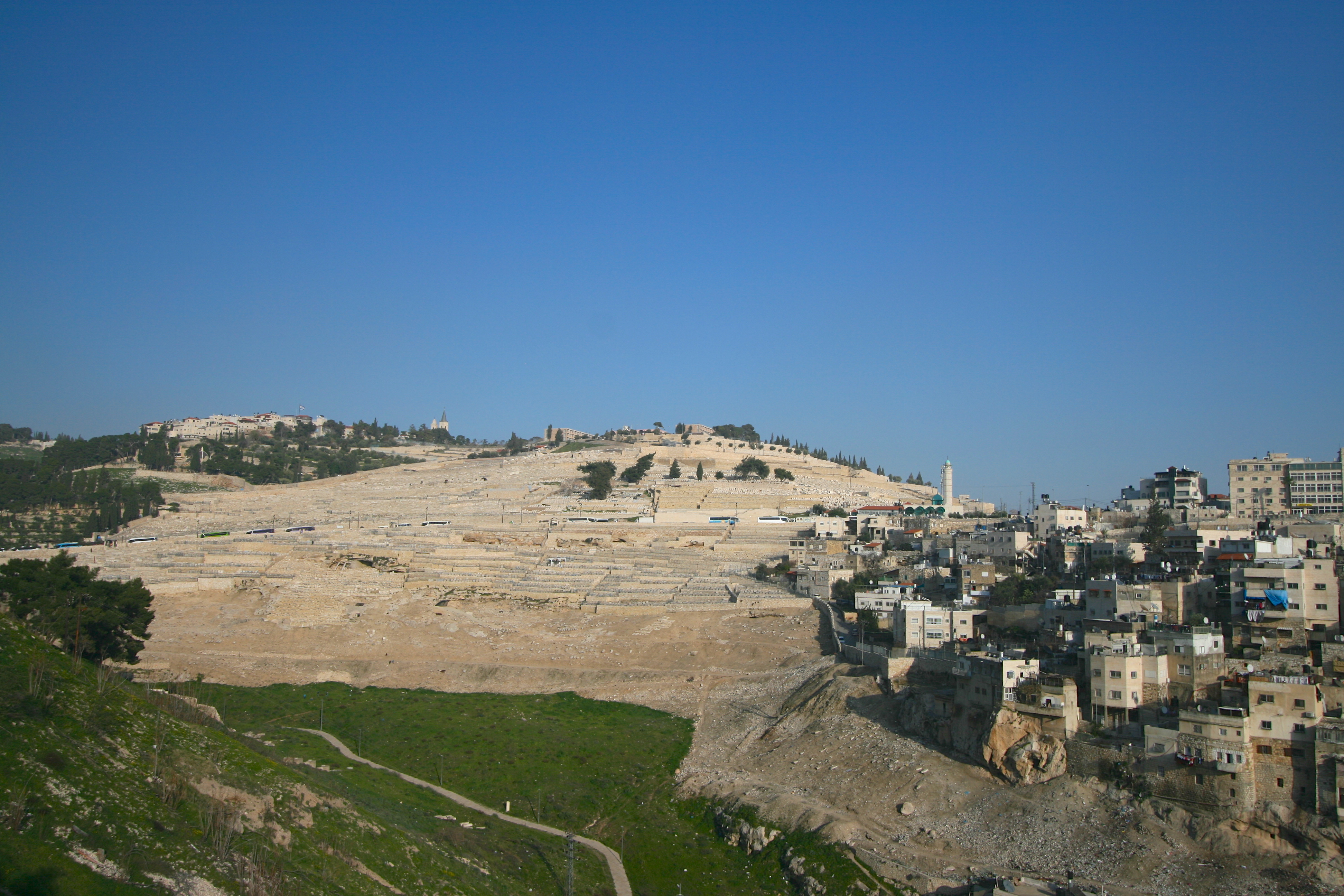
[caption id="attachment_164" align="alignnone" width="3888"]IMG_0571 Cemetery to the east of the walled city, toward the Mount of Olives[/caption]


Part of Jerusalem’s ancient water system was located under the City of David. It connects the Gihon Spring—Jerusalem’s fresh water supply—with the Siloam Pool. According to 2 Chronicles 32:2–4 and 2 Kings 20:20, this tunnel was dug during the reign of King Hezekiah of Judah to prepare Jerusalem for the imminent attack of the Assyrian king, Sennacherib. Hezekiah redirected the water through old and newly dug Jerusalem tunnels to prevent the Assyrians from cutting off the water supply

We had the choice of walking through the tunnel still containing water up to our knees, or walking through a dry tunnel – we went with the dry tunnel known as the Canaanite Tunnel.

At the end of Hezekiah’s tunnel is the Pool of Siloam.

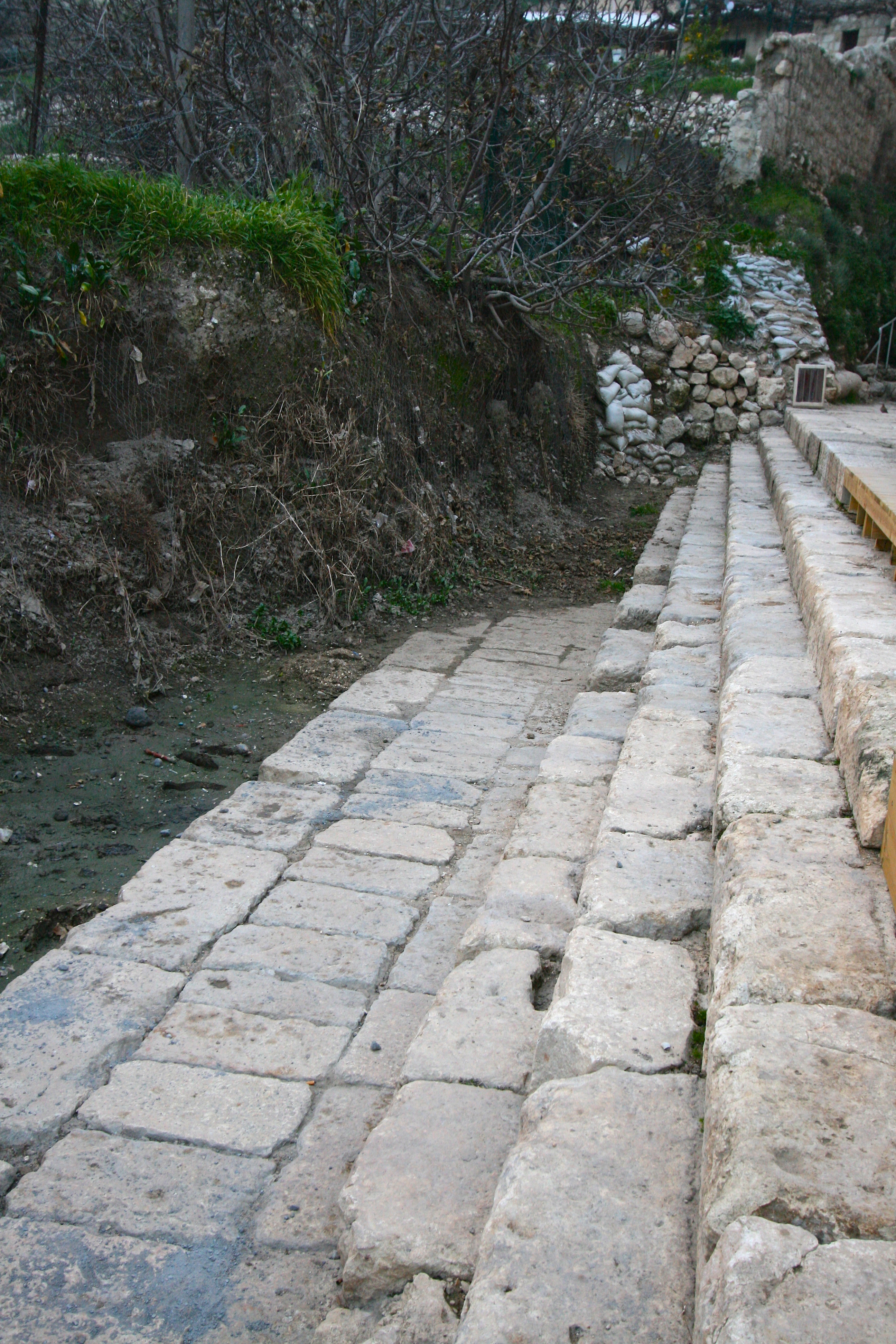
[caption id="attachment_166" align="alignnone" width="2592"]IMG_0582 Steps leading down into the Pool of Siloam[/caption]

This is another spot where we can say, with certainty that Jesus actually was!  The very place that He healed the man that was blind since birth, causing a “balagan” with the religious leaders ( John 9:1-7).

(Balagan is a Hebrew word that our guide, David, has been using everyday - describing a big mess or trouble.)

We then decided to call it a day.

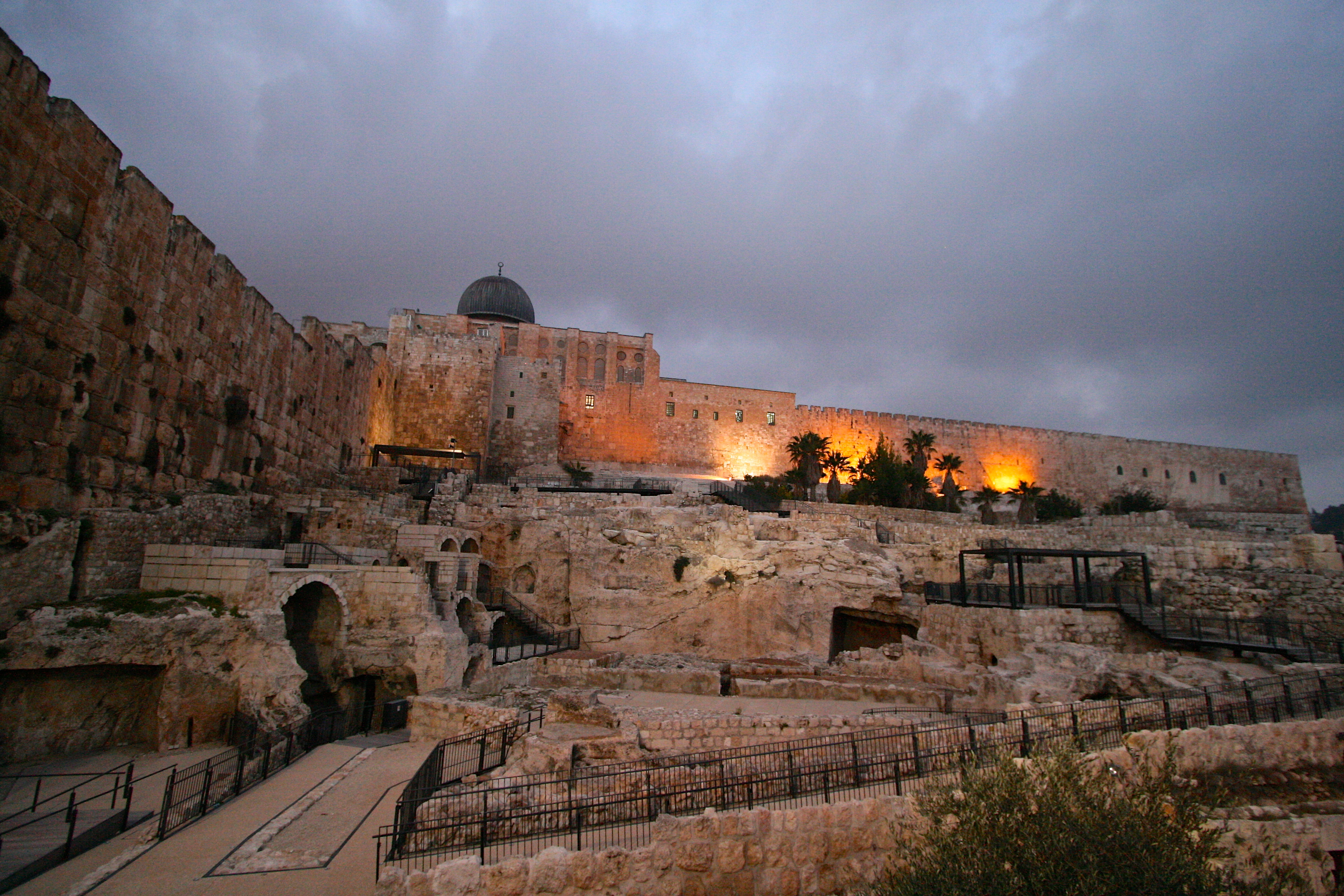
[caption id="attachment_167" align="alignnone" width="3888"]IMG_0583 The Old City at dusk looking toward the Southern steps[/caption]


We returned to the hotel and had dinner, but then walked back to the old city, entering through the Jaffa Gate, to wander around the city a little more. Finally, to bed.


Lila tov